Miyajidake Scarecrow Festival

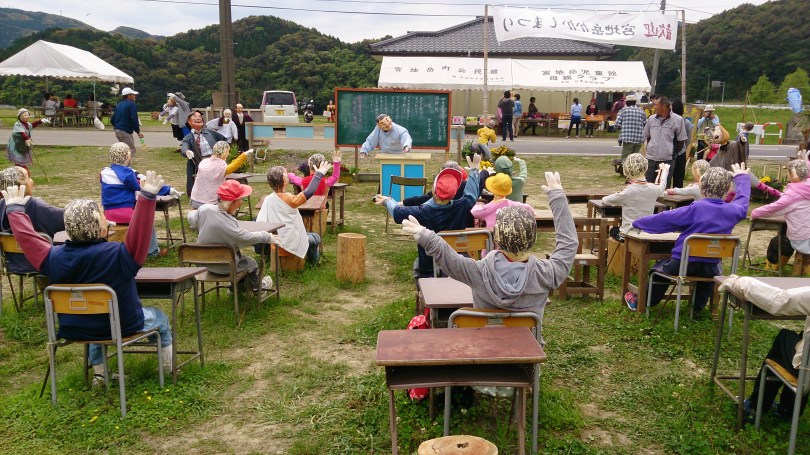
Possibly the most amusing and terrifying small local festival I’ve been to yet, the Miyajidake Scarecrow Festival (かけし祭り) is one of my favorite yearly events.  For weeks before dropping by, single scarecrows popped up around town, scaring the living daylights out of innocent passers-by with their lifelike poses. I saw one sitting at a bus stop, another waiting innocently alongside the road, and each time I was started into alertness. This festival should receive a prize for its simultaneous sincerity and creepiness, making it an event that I look very much forward to.

Ye Ol’ Bunkasai

wpid-DSC_0288.jpgBoth years of my time thus far as an ALT, I’ve found time to attend one or two local high schools’ Culture Festivals, known in Japan as bunkasai.

Sadly, we don’t have one at our junior high for one simple reason: our school is huge! We have about 800 students, which ends up making seven classes of 40 kids each per grade. Trying to force this many kids to come up with a presentation/performance of some sort and decorate their classrooms would be a huge deal (if Sports Day is any indication), so I was able to go to some high school bunkasai instead!

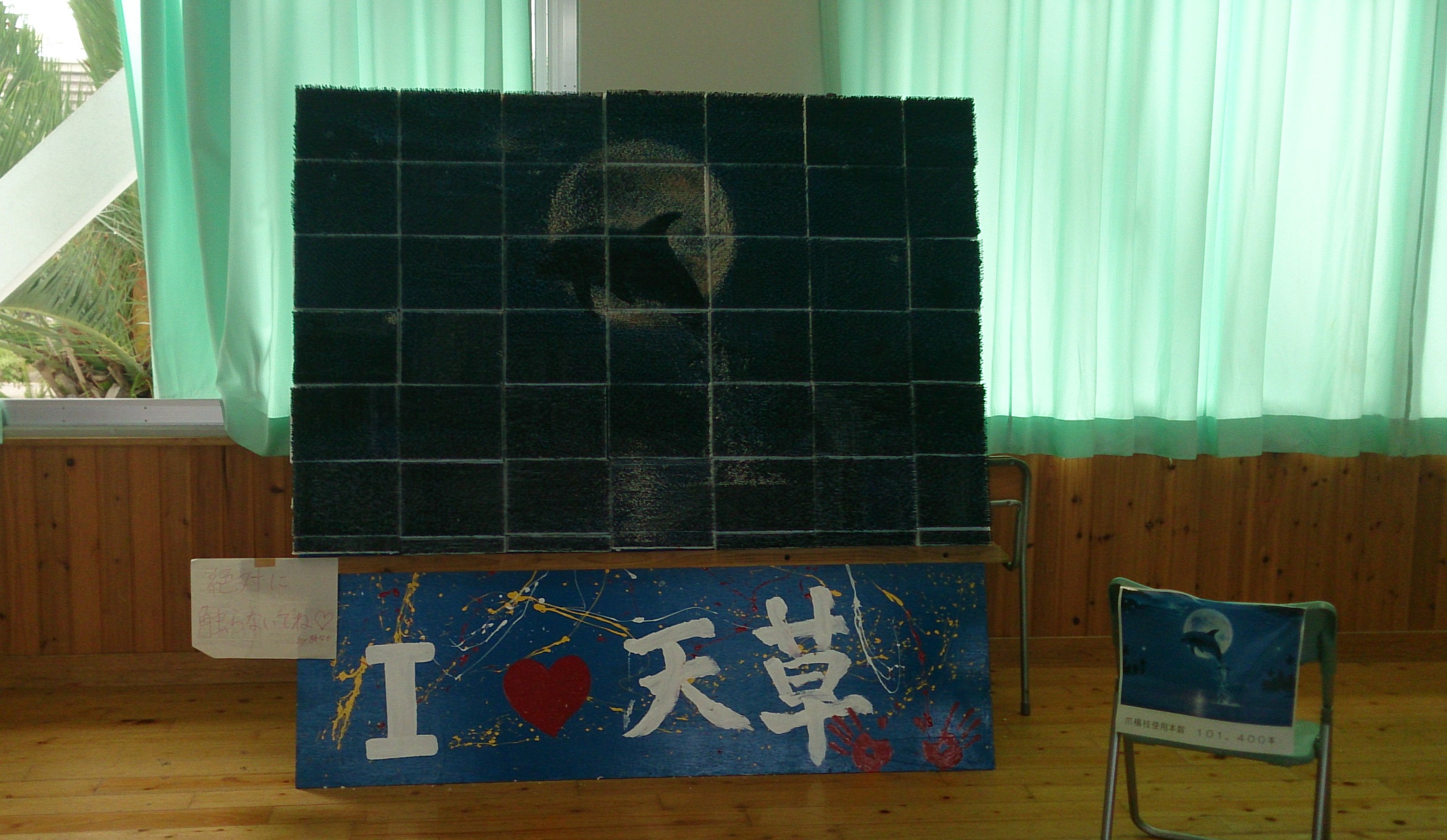
2013-10-19 11.55.57This year and last, I went to the local technical high school, where they focus on electronic, mechanical, or engineering craft. Each class only had some minimal decorations, but some of the basic activities in each room were quite impressive (some not, of course – it really varies by class). Last year, they had remote control cars set up that would drive above the lines painted on the course, following them seamlessly. And this year one of the hits of the festival was a picture area that you could dress up in wigs and Halloween accessories at. Once they developed the picture you were invited to do rakugaki (graffiti) on them at your leisure, then have them laminated. It was like an at home version of purikura, or print club booths. Then there are several classrooms decorated with woodwork or art made by students as well.

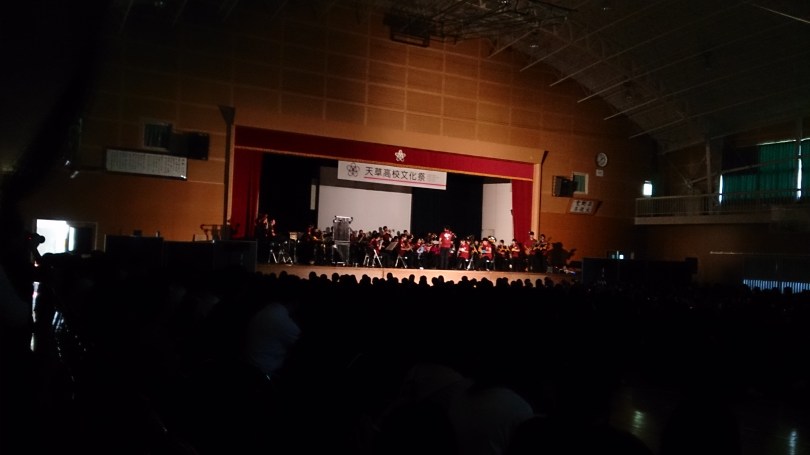
This year was a bit different, as a fellow ALT was invited to play with the brass band during the performance section of the program, which was held downstairs in an open, airy room. Promptly afterward, just as the year before, students began performing cross-dressing renditions of several well-known pop songs at the time.

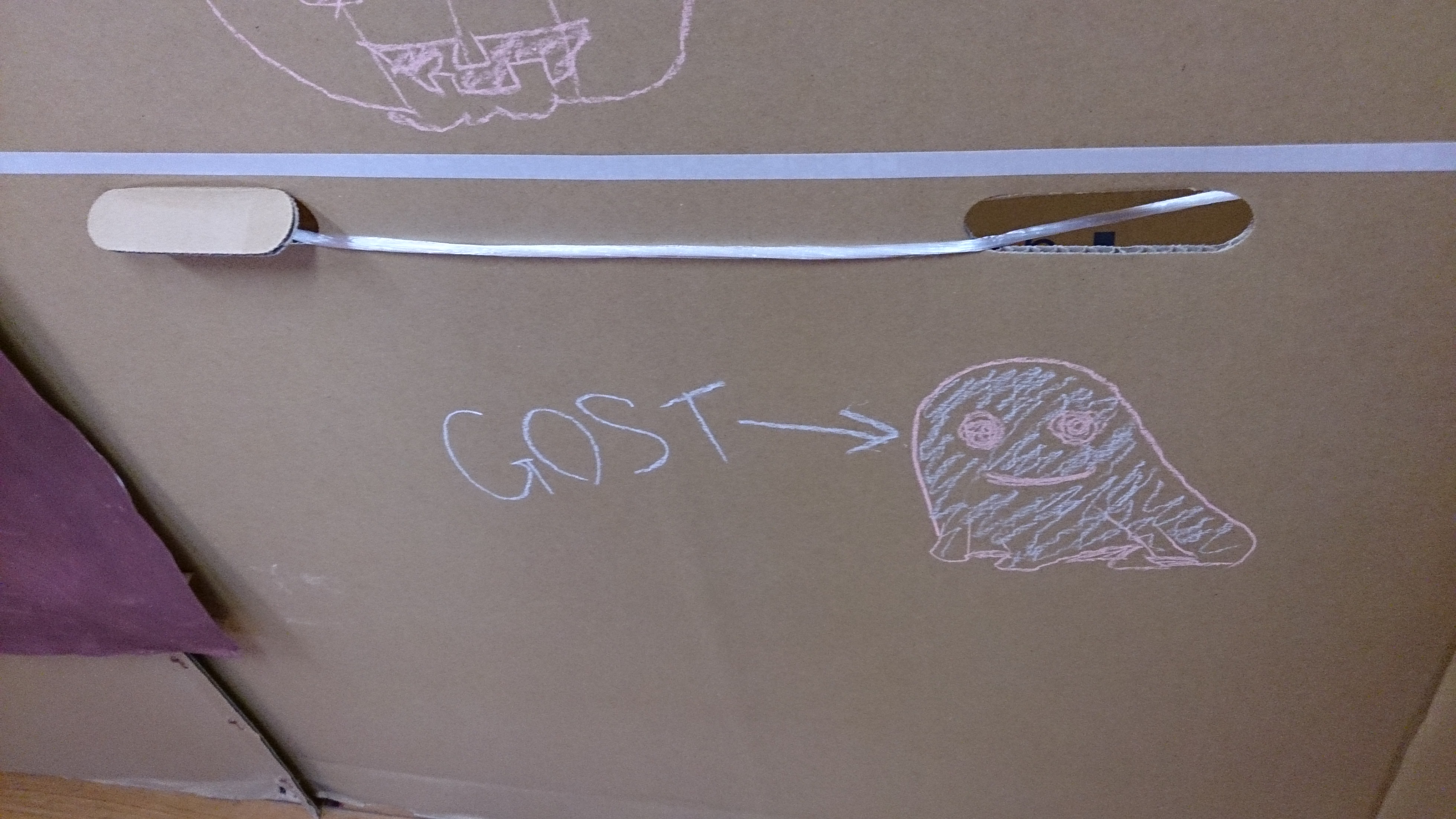
2014-10-18 13.04.21I also decided to drop by the other local high school for the latter half of the afternoon, where unfortunately things seemed to be wrapping up. One class had decided to do a tapioca cafe, which looked great but a teacher said they had already finished selling for the day. Another group, however, had made a maze in their class, which was actually a bit tricky despite the limited space! The theme was a haunted house, but it was a rather cute, pastel haunted house in my mind. :) Their main program, ongoing in the gym, consisted of several teachers and students executing unique musical performances. Several of them were quite good, but their brass band was absolutely fantastic at the end and completely stole the show.

After attending the high school cultural festivals, I’ll be honest – I kind of wish my base school had one of its own!

Sotsugyoshiki (卒業式), or Graduation

This is just a quick post I’ve had on the back burner since experiencing it last year. I haven’t got any photos to commemorate the experience, just impressions that I’d like to share.

This year and last year I was required to join the graduation ceremony at my base school, as most ALT’s are. At my school, we all come to the school on Sunday for the ceremony and take Monday off instead.

Only one school year, the junior high school third years, graduate, so this day is really all about them and the homeroom teachers they’ve spent all year with. Because it’s a special event, some teachers dress in full kimono, which comes out looking very stylish and fancy on the female teachers who’ve opted to do so; I haven’t seen any male homeroom teachers fully kimono up yet.

As is often the case in Japan, there are several required practices leading up to the actual event, during which the third years practice walking into the gymnasium in good time as well as standing up and sitting down in perfect time when required. They also have to sing a song of goodbye at the conclusion of the ceremony.

But the third years aren’t the only ones who have to work. The first and second years have to attend as well, all of them sitting in the back, applauding all seven classes as they walk in the gym single-file, continuously clapping. The teachers have to do this too, and I will testify that it can really tire out the hands.

Another aspect of this particular ceremony is that there are a whole lot of speeches being made, which always puts us behind schedule. It would perhaps be better if each speaker kept it brief, but instead each tends to plug on for at least 7-12 minutes. I know that if you try hard on your speech you’d like to read it, but at events like these, most people are tuning out anyway, so I feel that one should keep that in mind when preparing a speech and keep it to around 5 minutes. That way we could eat the bento’s we ordered when they are still warm…

One of my takeaways from this event is that it is relatively cut and dry. One representative goes to the stage and receives their class’s diplomas/certificates, so there isn’t that personal satisfaction in walking across the stage oneself. It’s a rather formulaic ceremony, perhaps for the sake of ceremony. And really what the kids are looking forward to most is likely the last class they have with their homeroom teacher, or tannin (担任). There they share some last moments and give their teachers flowers, thanking them for the entire year. As ALT’s we get a little bit of this on the last class day, depending on the teacher(s) we work with. My teacher got the kids all together and took a picture of us in each class, putting it together as a card for me from each. My teacher from last year made the kids each write a little card, then put them together on a large piece of paper and gave them to me at the end of the last class. This personal interaction is more meaningful than the official ceremony for me as an outsider, but I know that the homeroom teachers felt more accomplishment on behalf of the kids. I had one moment of emotional instability for a class that I really enjoyed because they were bright and motivated, even without knowing the answers all the time, but for the most part I was able to watch the ceremony without undue emotional stress.

All in all, it’s a positive aspect of school life that I think a lot of kids need and look forward to in order to be able to leave junior high and make the transition to high school. It’s another aspect of Japanese school life to experience as an ALT, and it gave me a little time to reflect on my own junior high school experience for sure. It’s interesting to think that I didn’t have a JHS graduation, if I remember correctly. The big graduation hurrahs in the US are high school and university, which worked for me! I’m certainly more than satisfied with my experience of them both, as well as these Japanese ceremonies as a teacher.
Yame Toro Ningyo Festival


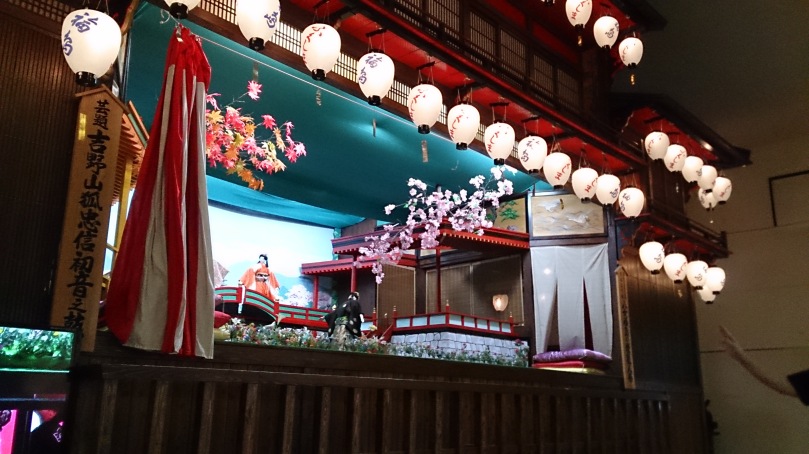
This is a festival I just happened to luck my way into when I went to visit my previous host family in October the first year I arrived for JET. This was a small local festival and we didn’t stay long, but in the short time I was there I got to experience a fair amount! 2013-09-23 11.34.08Yame is a town located on the outskirts of Kurume, which is well known for its green tea. But it also holds a yearly Lantern and Doll Festival based around the local puppet house. I had actually been to this particular culture house before when I was first in the area – our group of local homestayers made a traditional Japanese paper postcard there, with pressed flowers and pulp. It was an interesting experience at the time, and I was excited to realize that I was back in the same place again after so many years. 2013-09-23 10.17.53First, we ventured into a historical writer’s home which now functioned as a museum, and looked around his abode for some time. There was a great garden space that was set up much in the Buddhist temple style, with sand, rock, and select plants making up the exterior facade. Though it may sound simple, it was quite beautiful. In one of the small buildings set alongside the house, wood-carved lanterns lined the walls, giving it a calm, but slightly eerie aura that I enjoyed quite a bit. Then we wandered along the small streets, peeking in several shops along the way. The main shop of interest for me was a traditional green tea making shoppe. The architecture of the building was quite interesting, with a traditional facide painted black and a large machine at the front of the building. Whether they actually use the machine or not, I can’t say, but their tea is delicious and so are their tasty green tea chocolate crispy snacks! 2013-09-23 11.05.57A bit further down the street we stopped and chatted with a local vendor while taking a few sips of ramune. Upon chatting, my host parents discovered that they were conducting jinrikusha rides down the street! Usually jinrikusha rides are a unique experience in Japan, but in some areas they can come at a cost. This one was a rare low price, so my host parents insisted I go! I insisted that someone come with me, and it was quite a fun ride. He took us around the area and explained bits of local lore along the way. Though it was fun I did feel bad because it must take a fair amount of strength to hoist people along the streets in continuous motion, not only once, but for whomever pays for the service! Our hoister was quite thin and spry, so perhaps he just considered it a good workout. The last stop of the day was the doll theatre, which I believe is housed in the Yame Traditional Arts Museum. In the theatre, there is a video on loop that showcases a previous performance. Because of the busy festival going on, volunteers were on hand this time, and one approached us and other onlookers and invited us up on the stage to have a look at the undercarriage and inner workings of the puppet stage. Upon climbing the stairs to the backstage, you’re on the original stage, where the dolls are, but if you journey below stage, you see quite a different world: an intricate network of string and woodwork, connecting and controlling each of the puppets above. This is where the puppeteers work their manipulative magicks. And it really requires a good amount of synchronization and skill. If I remember correctly, the guide told us that it takes around 9 people to operate each doll. The reason is that there is one person for each moveable appendage, so one for each are, one for the head, one for the feet and hands and so on. 2013-09-23 11.59.39 I haven’t watched an entire production yet, but it seems like a very unique art medium and cultural performance. This particular day was very culturally demonstrative for me and I enjoyed it immensely. If you get a chance to check out the festival I’d definitely stop by!