In early February every year, the city of Nagasaki hosts the aptly named Nagasaki Lantern Festival. It is the most colorful Lantern Festival I’ve seen to date, so I enjoyed it very much. And that is even with crowded streets and a cross-shaped, two-street Chinatown. The photos should give an overall vibe of the scene that met us here at this festival. :)
We started out at a smaller park area that served as a one of the smaller venues, featuring a parade of a lantern mikoshi and a Chinese acrobatic show. There were a lot of fun acts that we saw, among which included a many masked dance, where the performer changed face masks with the wave of her fan, juggling, plate-spinning, and a chair stacking acrobatic demo of balance! It was a pretty exciting way to kick off the festival.
The park also exposed us to many lanterns as an introduction of what was to come later. You really get an eyeful of color at this event, which was one of my favorite things about it!
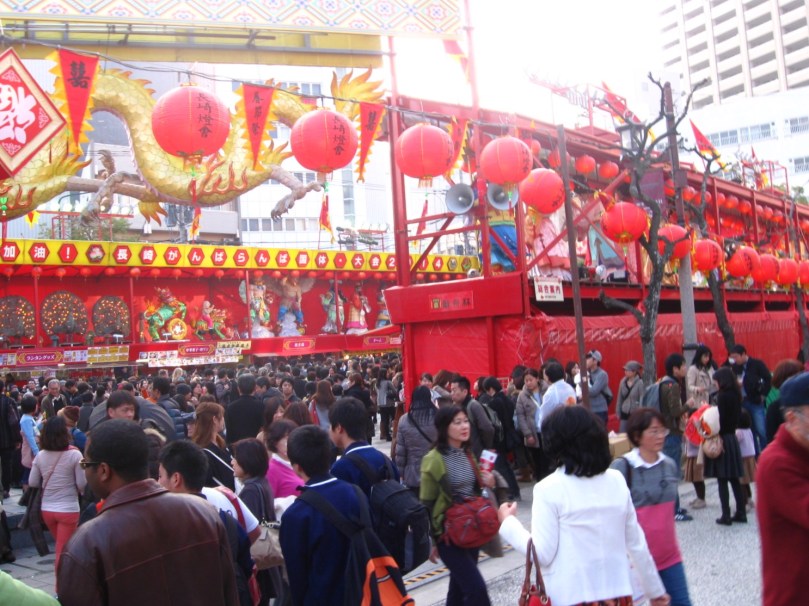
During the day, the lanterns were impressive enough. As you can tell from some of the photos, the lanterns are huge! Some of them are taller than most of the people that wandered the area. It was like being in a paper zoo!
After taking in the show here at the smaller venue, we started walking over to the main venue area, based just outside of the Chinatown in Nagasaki. This Chinatown is a plus shape, and literally consists of two streets, but it is of historical import, being one of the first Chinatown areas in Japan.
As you can tell, it is very crowded there at this time. Though it makes navigating the brimming streets difficult, you get used to it temporarily. It is worth putting up with for the views that the area provides. Even in the light of day the sights are moving, as having a look at these creations is rare. The crowd itself becomes a sight as does the street, likely becoming more lively than it had been for months previous. Around this time we ducked the crowd temporarily by popping into one of the restaurants to have try champon, a Chinese noodle dish introduced through trade that has now been adopted by the culture here as a mainstay. We enjoyed a few other dishes too and it was very delicious! I don’t remember the name, but if you approach the Chinatown through the gate from the northwest side, coming from the shopping areas, you’ll see it. It’s the first major restaurant on the corner on the left.
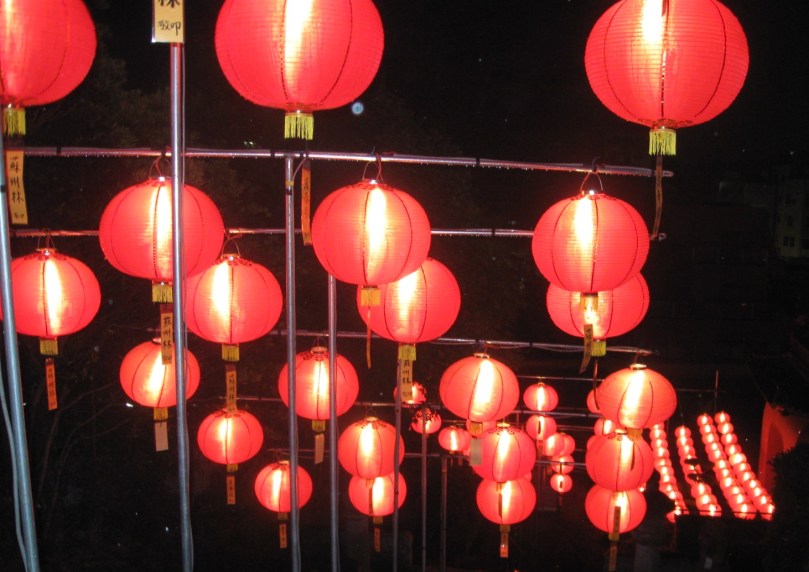
And as the day progressed into night, things only got more impressive. The lanterns are naturally more dramatic at night, and being surrounded by them makes you feel transported to some other world.
The most interesting part of this display was indeed a sight that is visible at the main venue. Though I’m sure it has to do with some aspect of the event’s history and/or its Chinese roots – I can’t say for certain – a huge offering was set at the center of the lantern viewing area that looked like this:
Numerous pig heads were set out on platters in a glass-encased room, with attendants ever attending the candles to keep their flames alight. It was such a display that at first I wasn’t sure that I was seeing what I was seeing. Or perhaps I hoped it was an illusion… It was dramatic and somewhat startling to say it simply.
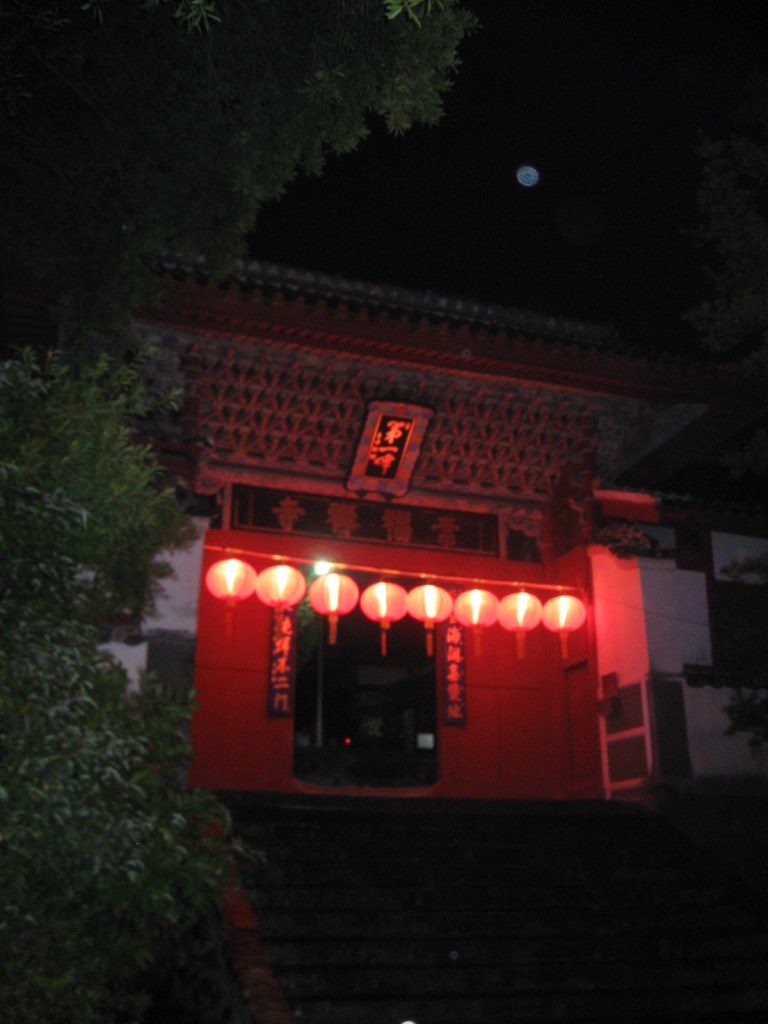
After viewing all the sights there we called it a night. We had seen most to all of what the festival had to offer and the next morning we planned to go to Gunkanjima, so we got somewhat of an early night. Passing by a temple on the way, we headed toward Cybac to attend our crowd-worn and sleepy minds and bodies. It was a great day.




 laceywrites