Hi all! This is a post I’ve been planning for some time, and now seems like a good time to share because I know that this year’s deadline is approaching for 2017 JET Program applicants — it’s November 18, 2016. Don’t let it sneak up on ya! Hehe. For a while I’ve been promising to give some insight into what became my first-time JET application success three years ago (2013). I’ve decided to start with the Statement of Purpose.
This is one of the most important elements of the written/digital application — as I’m sure you’re aware. It’s critical to your success because through your writing, you can draw a picture of who you are as an applicant with the potential to highlight your strengths and perhaps explain your weaknesses. I don’t know why, but it seems every round there are some who don’t give the statement the attention that it needs, but I strongly recommend taking your time to read and re-read it as much as you can before actually submitting. I definitely did.
Another key element to success: answer all of the questions put forth in the prompt and follow every given instruction exactly. You may ask why that is. Well, the personal statement doesn’t just show that you can write, but also that you are capable of coherent thought and can connect ideas. Most importantly of all, it shows that you can follow simple formatting instructions.
So for my application in 2013, and I’m sure it hasn’t changed too much since then, the instructions read as follows:
Statement of Purpose (1 original and 2 copies):
This is an essay, in English, of not more than two 8 1/2″ x 11″ (or A4) pages, typewritten in black 12 point font and double-spaced with one-inch margins. Anything beyond the required two pages will be discarded unread. Please type your name and page number (1 of 2, 2 of 2) on each page.You should incorporate all of the following points in your essay:
-
Relevant experience: Describe applicable experiences, professional skills, relevant interests, and personal qualities, and how you feel these will be useful to you as an ALT or CIR.
-
Motivation for Participation: State why you wish to go to Japan and participate in the JET Program and why you are interested in the position for which you are applying. Also address what you hope to gain, both personally and professionally, and what effect you hope to have on the Japanese community and internationally as a result of your participation in the JET Program.
That seems easy enough, right? Get into word, and before you even start writing set the basic format to be what is requesting in the prompt. That means your margins, your font, your paper size, and set your headers exactly as requested.
Then start writing. The key to great writing is to not only say what you want to say, but to do so in a logical way so that your writing evolves over the course of your very limited two page guideline. A lot of us have a fair amount to say about Japan and our relation to it, so before you know it, you’ll be over two pages and will have to cut down! When it comes time to do so, do it thoughtfully.
In my next post, I hope to share with you a few excerpts from my own statement. Please feel free to ask questions in the comments below. Best of luck in the meantime!

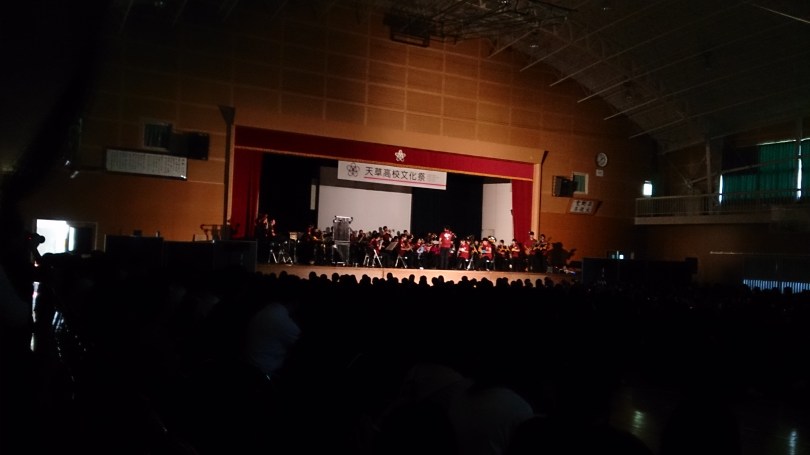
 Both years of my time thus far as an ALT, I’ve found time to attend one or two local high schools’ Culture Festivals, known in Japan as bunkasai.

 laceywrites