Nagasaki Lantern Festival

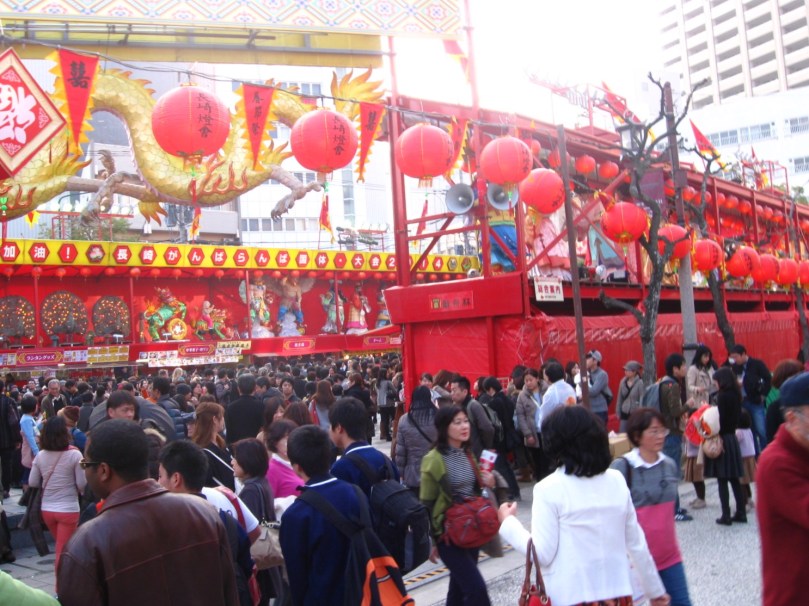
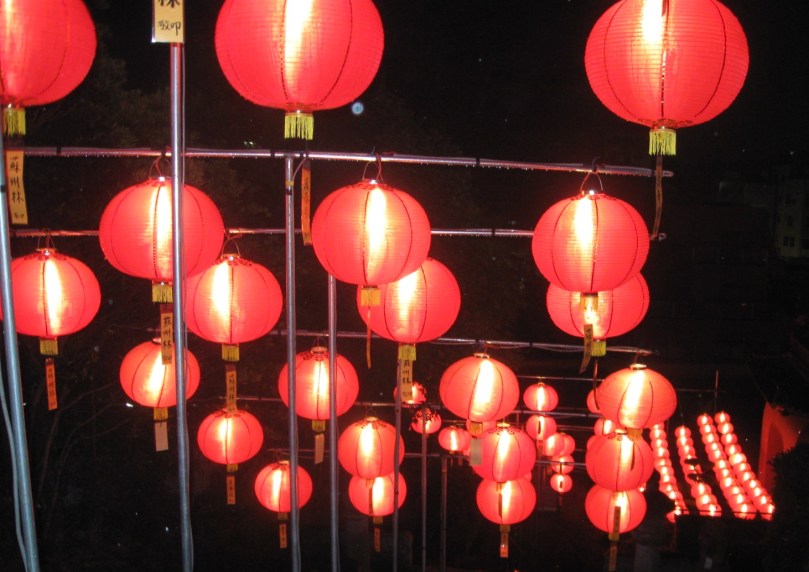
In early February every year, the city of Nagasaki hosts the aptly named Nagasaki Lantern Festival. It is the most colorful Lantern Festival I’ve seen to date, so I enjoyed it very much. And that is even with crowded streets and a cross-shaped, two-street Chinatown. The photos should give an overall vibe of the scene that met us here at this festival. :)

We started out at a smaller park area that served as a one of the smaller venues, featuring a parade of a lantern mikoshi and a Chinese acrobatic show. There were a lot of fun acts that we saw, among which included a many masked dance, where the performer changed face masks with the wave of her fan, juggling, plate-spinning, and a chair stacking acrobatic demo of balance! It was a pretty exciting way to kick off the festival.

The park also exposed us to many lanterns as an introduction of what was to come later. You really get an eyeful of color at this event, which was one of my favorite things about it!

During the day, the lanterns were impressive enough. As you can tell from some of the photos, the lanterns are huge! Some of them are taller than most of the people that wandered the area. It was like being in a paper zoo!

After taking in the show here at the smaller venue, we started walking over to the main venue area, based just outside of the Chinatown in Nagasaki. This Chinatown is a plus shape, and literally consists of two streets, but it is of historical import, being one of the first Chinatown areas in Japan.

As you can tell, it is very crowded there at this time. Though it makes navigating the brimming streets difficult, you get used to it temporarily. It is worth putting up with for the views that the area provides. Even in the light of day the sights are moving, as having a look at these creations is rare. The crowd itself becomes a sight as does the street, likely becoming more lively than it had been for months previous. Around this time we ducked the crowd temporarily by popping into one of the restaurants to have try champon, a Chinese noodle dish introduced through trade that has now been adopted by the culture here as a mainstay. We enjoyed a few other dishes too and it was very delicious! I don’t remember the name, but if you approach the Chinatown through the gate from the northwest side, coming from the shopping areas, you’ll see it. It’s the first major restaurant on the corner on the left.

And as the day progressed into night, things only got more impressive. The lanterns are naturally more dramatic at night, and being surrounded by them makes you feel transported to some other world.

The most interesting part of this display was indeed a sight that is visible at the main venue. Though I’m sure it has to do with some aspect of the event’s history and/or its Chinese roots – I can’t say for certain – a huge offering was set at the center of the lantern viewing area that looked like this:

Numerous pig heads were set out on platters in a glass-encased room, with attendants ever attending the candles to keep their flames alight. It was such a display that at first I wasn’t sure that I was seeing what I was seeing. Or perhaps I hoped it was an illusion… It was dramatic and somewhat startling to say it simply.

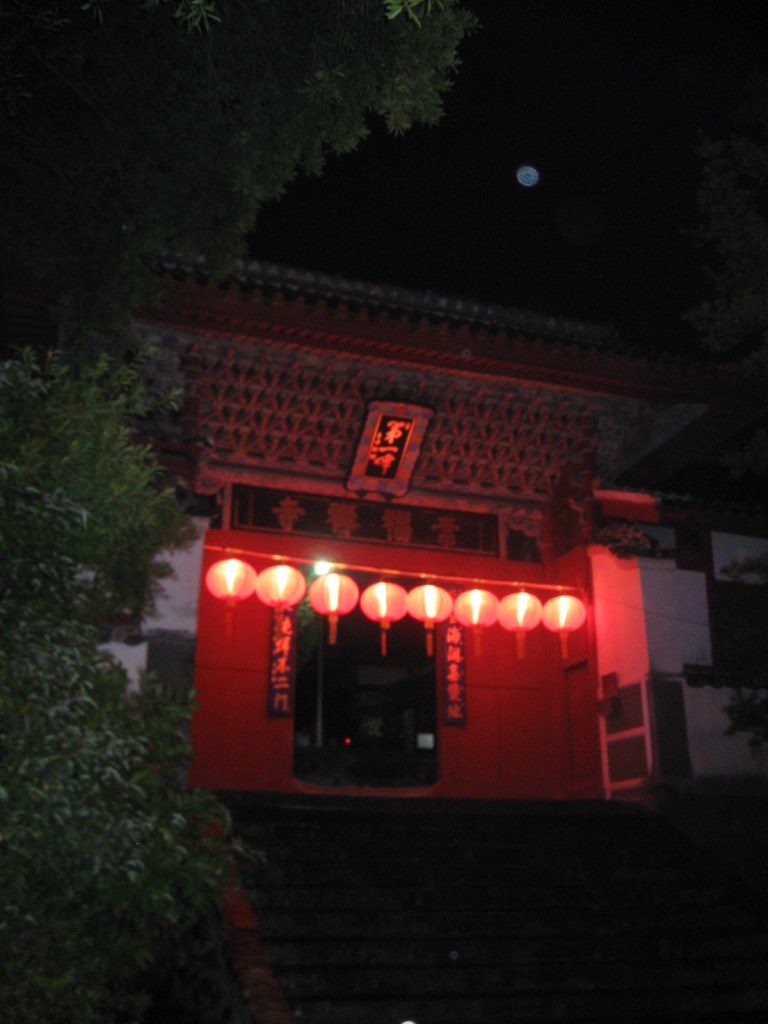
After viewing all the sights there we called it a night. We had seen most to all of what the festival had to offer and the next morning we planned to go to Gunkanjima, so we got somewhat of an early night. Passing by a temple on the way, we headed toward Cybac to attend our crowd-worn and sleepy minds and bodies. It was a great day.
Tsujunkyo Bridge (通潤橋)

2014-08-30 08.52.56On the outskirts of Yamato town in Kumamoto prefecture, is a very old, very functional aqueduct bridge known as Tsujunkyo. Built in 1854, it is the largest aqueduct bridge made of stone in Japan! Most weekends the bridge demonstrates its irrigating success by spurting out massive amounts of water around 1 PM. I went in the morning on the way to Miyazaki last time, so I was unable to see the latter, but it was still an interesting experience I wanted to share. The area is full of natural scenery intertwined with agricultural lands, which provides visitors with yet another idyllic vision of Japan.

Reihoku & Amakusa-machi 苓北と天草町

It’s about time I offered another post with a bit of local flavor, so here it is. Located on the west side of Shimoshima, the lower island of Amakusa, lie Reihoku and Amakusa-machi. The latter, Amakusa Town, is the namesake for what has become the collective of formerly independent towns on the island; Reihoku still operates separately from Amakusa City. They are two separate areas, but they have some of the most beautiful natural scenery, not to mention a few of the more well-known sightseeing spots, on the island.
2014-02-12 17.28.51One day after school in my first year here, a couple of the 3rd year JHS teachers had decided to go on a quick whirlwind tour of western Amakusa, intent on taking photos and videos that would further inform students about the greater area in which they live. Though many students have lived here their whole lives, they’ve never been outside Hondo, the most populous/urban area! I understand though; since I’ve been here I’ve yet to make it to quite a few of the highlights on the upper and lower islands. But I think since my time here may be wrapping up, I will make more of a point to visit them in the year that follows. It would be a definite shame to not check out the beautiful natural attractions for sure, a few of which are to follow.

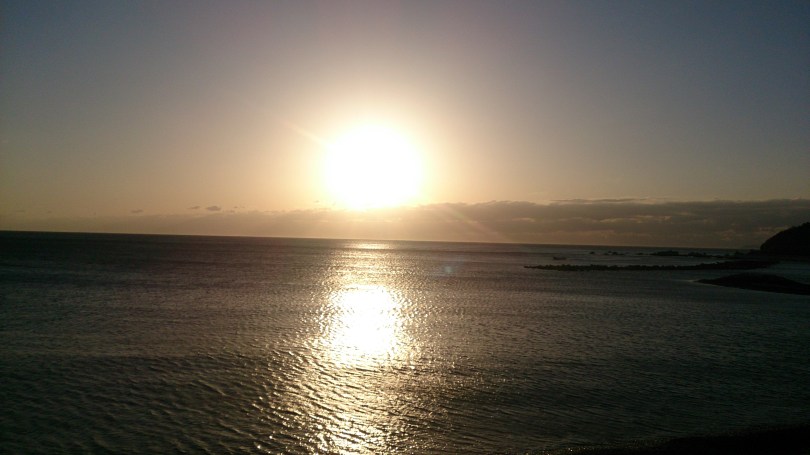
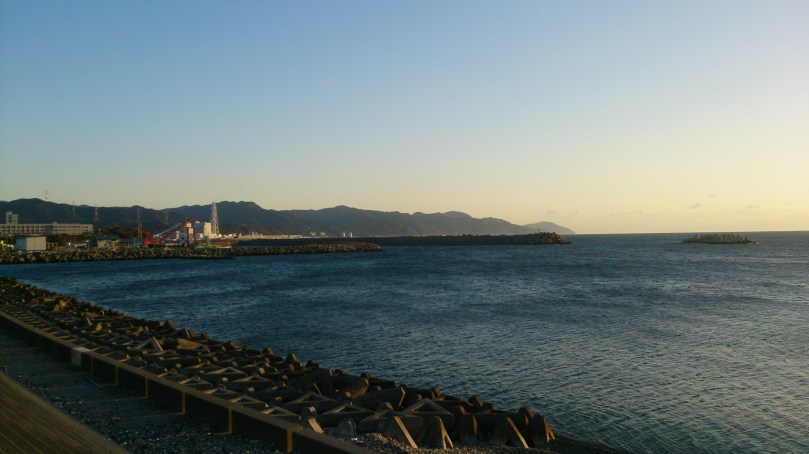
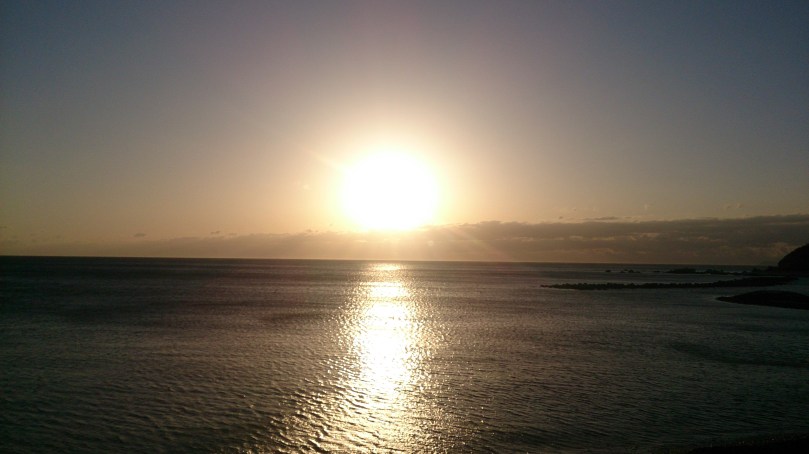
Reihoku is known for its beautiful seaside, pottery, castle, and sunsets. It’s a mainstay on the sunset drives that come highly recommended in the area’s tourist paraphernalia. Here’s a sample of some of the beauty you can see here.

After our stop in Reihoku, we were racing against daylight to catch the sunsets at a couple of the other viewing points, so we stopped off two more times on the way to Amakusa-machi.

After this point, there was little to no sunlight left, but through a bit of determination, we made it to Amakusa-machi to check out Oe Church and Sakitsu Church, with varying levels of lighting, as you’ll see. Amakusa-machi is similarly well-known for its pottery and sunsets, but also for it’s beaches and history with the Hidden Christians. Groups of Christians observing their religion covertly due to oppression during the Edo period were found in rare pockets of multicultural exposure, mostly ports and harbours in Japan (also see Nagasaki, Kobe, to name a couple). It wasn’t until the Meiji era that religious freedom was restored and people were allowed to observe their religions without repercussions. I’m no Christian, but isn’t freedom of choice a wonderful thing?

Anywho, that just about wraps up what was my first whirlwind tour of the western shore of the island I’ve been placed on. More to come soon!

Hiroshima Voyage [Final Day]

My last day is Hiroshima on a great note. The weather was sunny, but cool, and I set out early in the morning to hit the last three sights on my to-do list.  Out of all museums, I think I enjoy art museums the most, so I wanted to make time to see more diverse museums than I can usually find in Kumamoto. I had heard some rumors of some great collections that would be there during my scheduled voyage, so I decided to tackle them all before hopping on a shinkansen around noon to head back home.

DSC_0810

DSC_0818The first stop was close to my hotel, opening an hour earlier than the others, so naturally I headed there first. The Hiroshima Museum of Art in name, I found beautiful gardens surrounding an architecturally interesting building, which housed an impressive collection of paintings and sketches. They have four galleries presented in a timeline fashion: 1 – From Romanticism to Impressionism, 2 – Post-Impressionists and Neo-Impressionists, 3 – Fauvism and Picasso, and 4 – École de Paris. They also have a section called “The Annex” which houses special collections and exhibitions. I was honestly quite surprised that they had so many European paintings of note! (You’ll see what I mean if you check out the website.) This was the one particular museum that I didn’t research very much before coming, so I was pleasantly surprised even thought the entry fee was a little high. The special exhibitions at the time I went featured a variety of modern Japanese works, one which really appealed to me. It was a gallery of a man’s paintings of cats (and other aspects of life)! It really impressed me, but for some reason, now I’m unable to recover his name. If I find it, I’ll update the post immediately! :) The moral is, that I wasn’t sure anything would appeal to me in the annex, but it did! So I was happy about my venture in that section. One thing that could be improved – the museum could probably improve upon their English descriptions of the Japanese works. It’s quite good for all the other sections, but there are suddenly none in the annex, which is a bit surprising.

Next on my list was the Hiroshima Prefectural Art Museum, located right next to Shukkeien, for those who are interested. At the time I visited this museum, the main collection was one put together cooperatively by all the curators, featuring some of their favorite pieces. There was a lot of cool stuff there, but one particular piece of note – Salvador Dali’s Dream of Venus was there in large format. It was an undoubted favorite among visitors I think, and I spent a good amount of time sitting before it, pondering its depths. It was lucky that the museum wasn’t crowded on this day because the holidays had ended, giving me adequate time to move through at my own pace. The piece was fantastic, and the rest of the main exhibition didn’t let down either! As I proceeded through works by artists I didn’t know, I found myself adequately stimulated the entirety of my time there. So though I can’t speak to other exhibits presently housed there, my experience was a good one, with proper English descriptions (if I remember correctly).

DSC_0821
It’s a lovely walk over to the Higashiyama area. :)

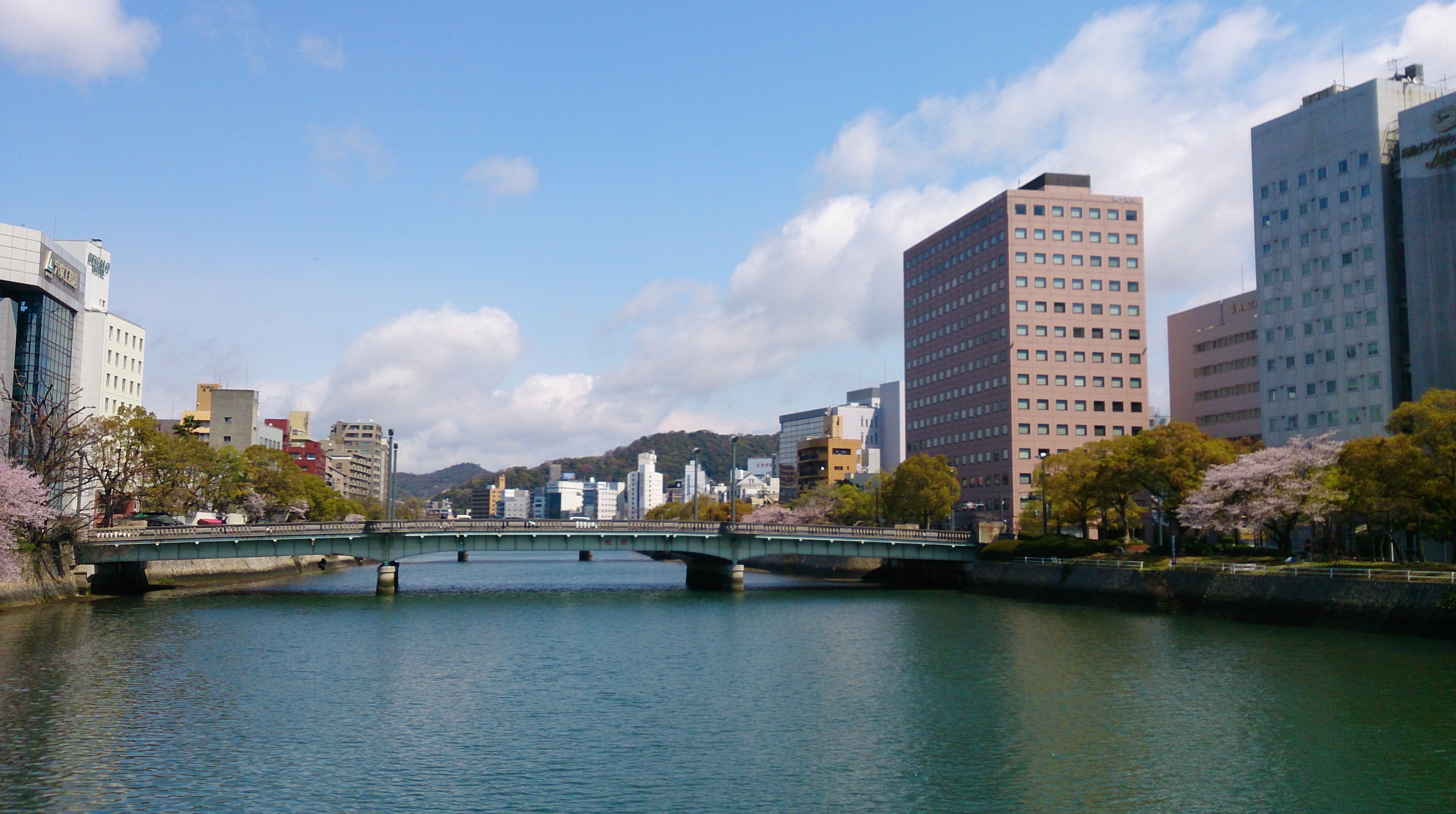
The last stop on my route was Hiroshima MOCA – the Museum of Contemporary Art. This museum was different in all respects from those that preceded it – focusing on interactive art exhibitions rather than the usual. As is expected of a MOCA, the outside of the museum had plentiful sculpture surrounding it. What’s more is that the museum is in the middle of Higashiyama Park, so if you were to walk a little around the area I think you would benefit! The sakura was plentiful. The only thing is that the park and museum are a little ways away from the main sights you may be visiting.

As I mentioned, the main exhibit here focused on interactions with art, and it’s practical uses in the real world. There was so much to do here! Contrary to most art exhibits, it was encouraged that you touch and use some creations, featuring a puppet theater, a carriage creation, a library, and more.

DSC_0840
Apologies for the darkness of the shot… it seems slightly creepy in this light. Not altogether inaccurate, but more child-friendly than is visible here.

My favorite part was the handmade wooden stairwell that led down to the second half of the exhibit.

Once you reached the bottom of the stairs, there was a video project and several scale model recreations. All in all, I think I had good experiences across the board at art museums in Hiroshima. Though exhibits cycle, I think you’d be safe spending some time at any of the places I listed that appeals to you. It was a nice, laidback day that can be much-needed in your itinerary, depending on your other activities.

That’s all for Hiroshima you guys! I hope you’ve enjoyed it as much as I did. I think I’ll move on to local highlights next to give a bit of a break. I feel like maybe I should also offer a few more insights and information regarding the JET Program. So keep an eye out for what’s next!