
Here’s Part 2 of Miyajima! Please enjoy.
As you know, I visited the well-renowned Itsukushima Shrine and other smaller sites that one can find upon their exit of the shrine complex, like Daiganji Temple and cute little deer. Afterward, I set my sights on a path that would lead me up toward the Miyajima Ropeway, bound for Mt. Misen. But along the way, I got caught up in even more sights.
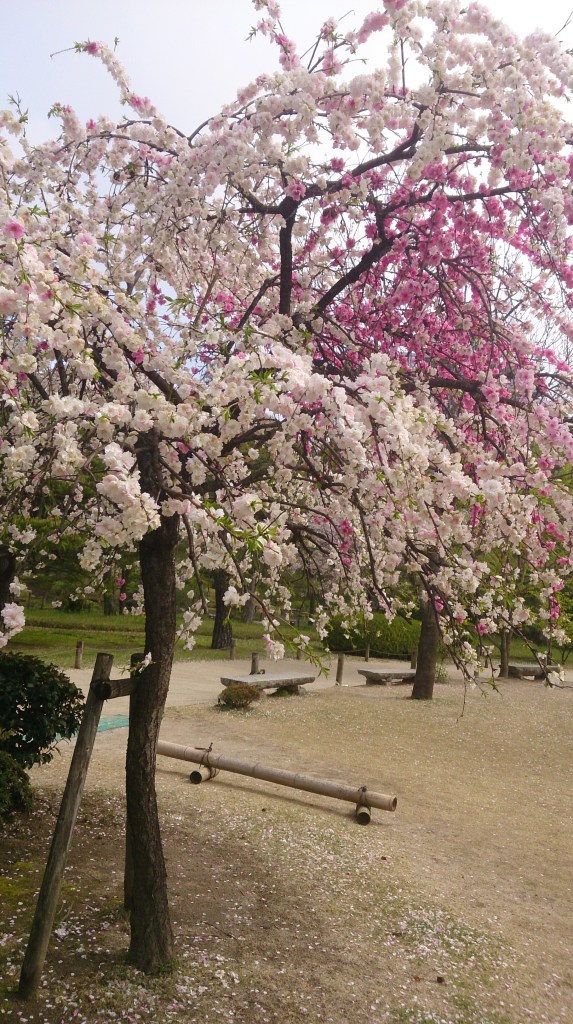
The Ropeway is located a little more inland than other sightseeing points. It’s possible to hike up to the mountain but it would take a whole day, plus it was raining and drizzling so I didn’t want to go that route. So on a day when I had to wander over to the ropeway on foot, it felt natural to stop off and see what the local area has to provide. First I was drawn to the Tahoto Pagoda, a small pagoda that was located amid many sakura blossoms. Then I continued on to make another happy discovery. As I mentioned, I found my favorite piece of Miyajima here; tucked away in the mountains, it goes by the name Daisho-in (大聖院).
I find the best travel discoveries are often such as these – the moment you stumble on something fantastic, something that wasn’t on your to-do list, but something that you went out of your way to go see just because it was close-by or seemed interesting. That’s what this was for me. A short hike inland, but still clearly demarcated, I followed the signs to Daisho-In Temple. I was expecting a run-of-the-mill, average temple, but I was surprised to get quite a bit more from visiting here. Right from the moment I arrived, I saw things I hadn’t seen at any other temple. Once you’ve been in Japan for some time and seen your fair share of temples, you find that most of their contents are the same. So you can image, a place like this was a happy coincidence.


As you can tell from the pictures above, there was no shortage of matter to lay one’s eyes on. Here were a couple of what I remember as my favorites.

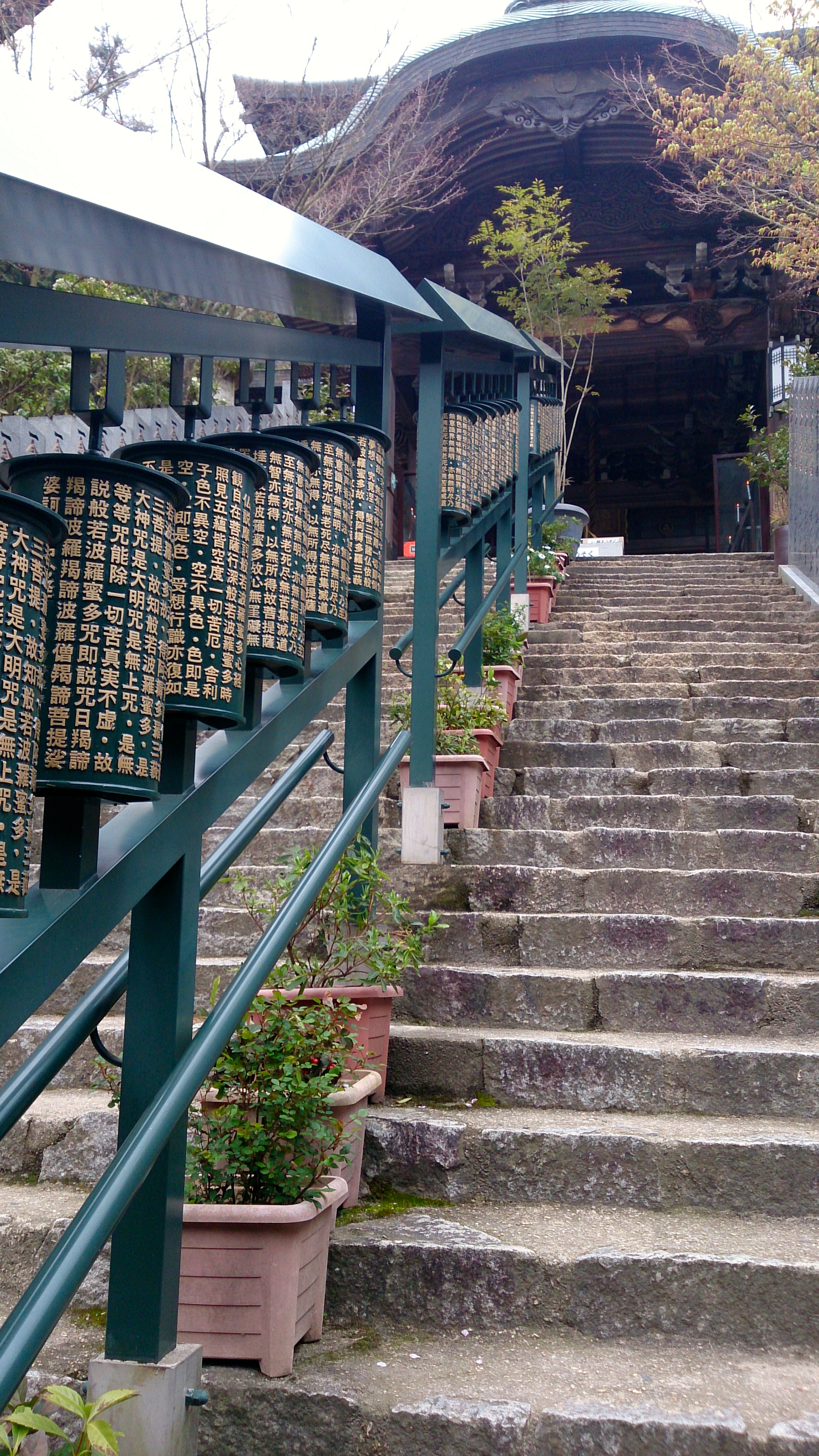 And of course, the fantastic spinning sutras! It is said that by spinning the sutras, you receive the same effect as if you were to read them aloud. And they make a very interesting sound when spun. It makes you feel like a lot is happening, but gently. I hope I received some benefits myself!
Another aspect of the temple I was a big fan of, was the natural cave that was designed as a tribute to the Shikoku pilgrimage, but I didn’t take pictures because at the time there were people there praying to the statues around me, and I didn’t want to be disrespectful. The atmosphere as you walk in is very somber and serene at the same time. Imagine a large golden Buddha at the end of a short hall, lined on all sides by rows of foot-tall figures, each representing a pilgrim, the lights dimmed, incense lit all around. And as you walk down and complete the first U-shaped walkway, you turn the corner and do it a second time. As I’ve often thought to myself and which I’ll now share with you, I feel more spiritual energy in a Buddhist environment than I’ve ever felt in a church, so perhaps that was why this was moving to me. There was a subtle moment, when staring at the Buddha from the entrance that I felt myself and my place. It wasn’t complete understanding, but a moment of intense self-awareness. Also of satisfiedness, as though I could linger in that spot for some time and not move from it. It was very inspiring.
Upon taking snaps of the Niō – the benevolent kings that guard temple entrances – I was content to leave the premises and make my way to the final destination of my Miyajima day, Mt. Misen.

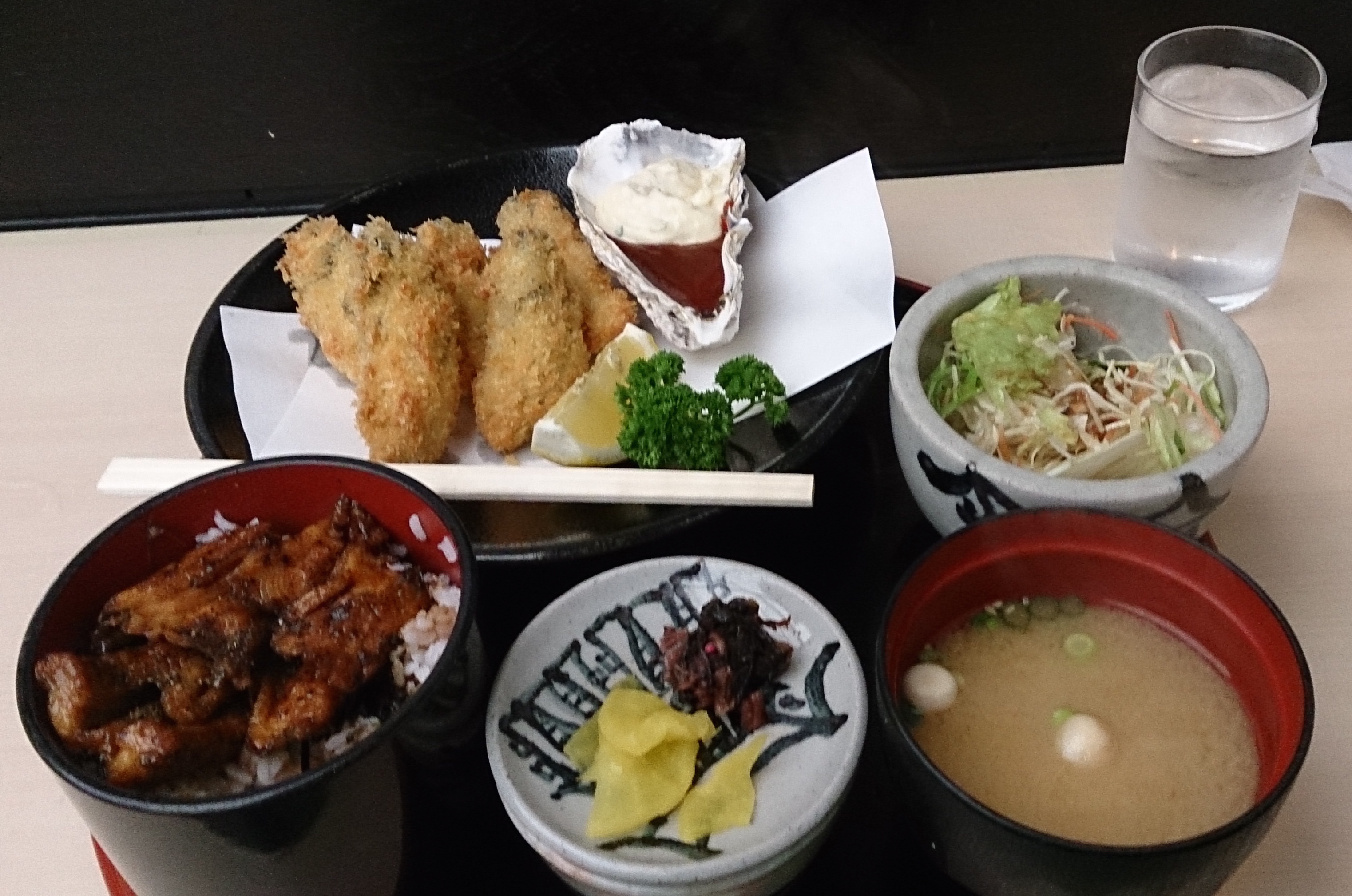 But before that! I was incredibly hungry, and since I had to retrace my steps a bit anyway in order to get to my final destination, I decided to pop in for a bite. I was lucky to get into a well-known place called Yakigaki no Hayashi, right before the lunch crowd swelled. I chose a tasty teishoku set meal of fried oysters (カキフライ) and unagi-don (うなぎ丼). The set was a little expensive but it was DELICIOUS. I highly recommend stopping in here for some of the islands specialty oysters if you get a chance, as you can’t go wrong.
Signage in Miyajima really helps ease you into your sightseeing course. If you come with no plan you haven’t got to worry as there are guidepost signs indicating directions and distances to sights close at hand. I had planned to navigate my way through the island but found it unnecessary immediately. So I relied on signage to lead me to the ropeway. I highly recommend this, as it takes you through a lovely park on the way, called Kōyō Kōen (紅葉公園). As you can tell here, from the photos below, there are many natural sources of good photo opportunity here, with all the quaint red-orange bridges tucked in amongst all the greenery. It could really be inspiring from almost every angle…


Anyway, I eventually reached the base point of the ropeway, and I have to admit, there’s always a lump in my throat or a slight clog that occurs when it comes to the thought of ropeways for me. Hoisted in a tiny box above open mountains and jutting trees may really not be for everyone… especially upon looking up and placing all faith and hope in your possession on the manmade cable mechanism that clicks away steadily above. For this particular cable car ride, I was allotted an entire car to myself! Which was nice and also terrifying. Plus, Mt. Misen’s Ropeway system has a stop in the middle, where you transfer cars to get to the second stretch, which brings you to the top.


Once you’ve arrived at the final destination, it’s a relief, especially if you’re of the same disposition as me. If you remember properly, this particular day was a misty, cloudy, rainy one, which will become evident in these last few photographs. So upon reaching the top-most point of our venture, there was little to no visibility on all sides because of the aforementioned conditions. I took a quick break in the indoor area before heading out, and as an interesting aside I’d like to share a quick tale. I decided to have a drink from the vending machine at that time, so as usual, I placed my exact change in the machine — only to have some little kid swoop out of nowhere and push a random button on the machine before I could!! This is a basic example of parental supervision here in Japan. Luckily for me, this kid was half-Japanese, so his father realized what had happened and reimbursed me, taking the drink that he had selected for me. Which I think was the right thing to do in that situation… thanks foreigner dad!
After drinking my drink, I set out to the summit viewing point with the intention of also checking out the temple, Dainichidō, on the way.
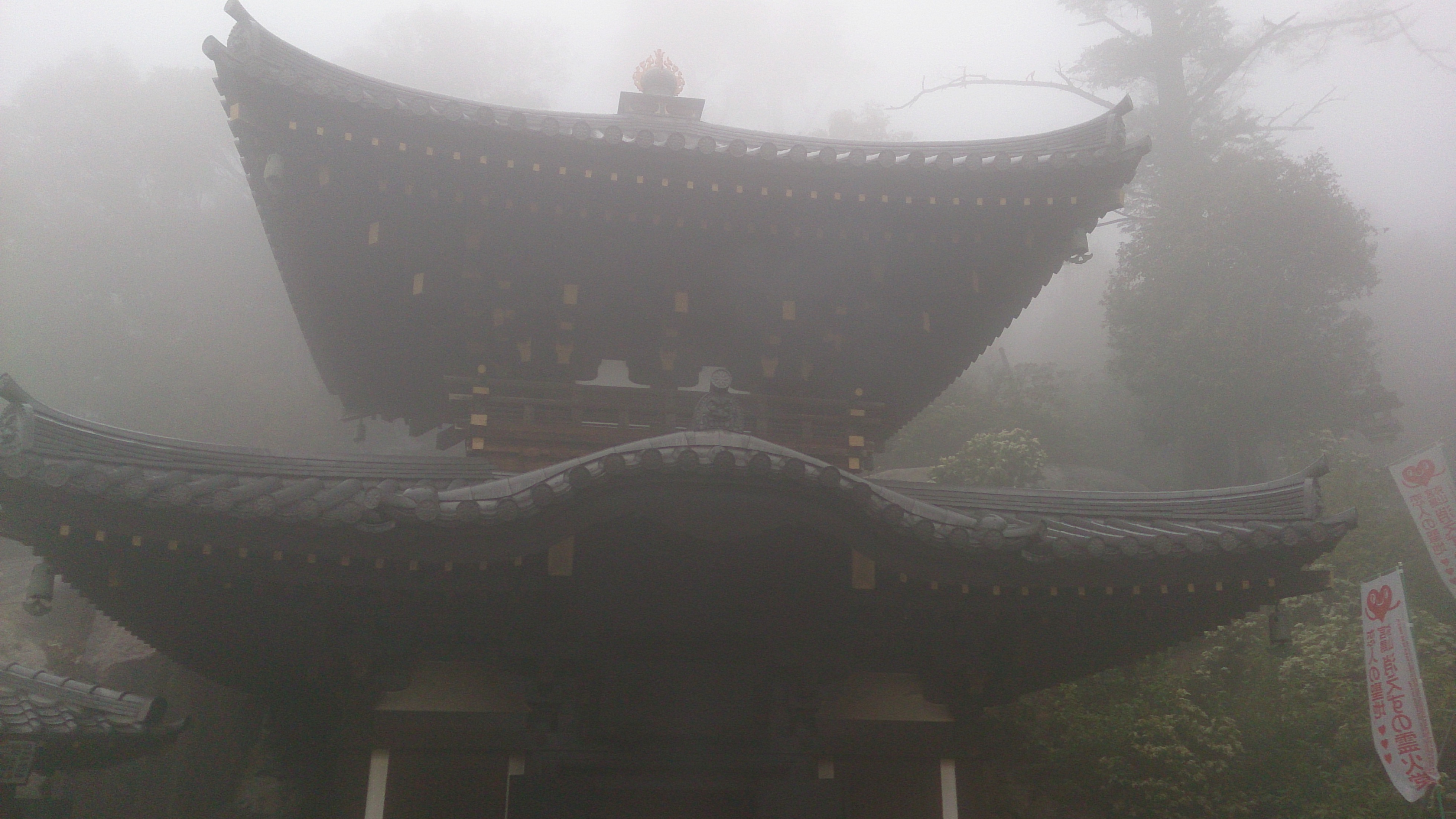
Dainichidō became the main point of interest for me, especially because of the weather. Firstly, the fog made it impossible to see past 2 meters ahead of you (complicating an already slippery hike), and besides that, the fog completely changed the atmosphere of the place. The fog leant such a surreal, mystical air to the temple, as though some dramatic scene drawn from the depths of Asian cinema would soon occur in real life. Aside from the number of tourists, I felt like I was in a completely different, fantastical world. I like rainy weather, so I think this was a fortuitous occurrence! The creepiness of the scene increased my affinity for the temple without a doubt.


As you can gather from the pictures, I lit a candle for my family and host family (names written on back) for the safety/security of one’s family, kanai anzen (家内安全). The picture of the steaming, smoking pot is a typical, though not necessarily common, Japanese temple scene; the pot requires diligent observation of those who work there to keep it continually burning, a part of its Buddhist heritage.
Eventually, I ended up at the viewing point at the top of the mountain, which for the reasons I stated earlier, was a tad bit disappointing. But I saw an incredible amount of rocks! Not to mention mud. And trees!


I closed my circuit of the mountain at about 4 to make sure I could catch one of the last few ropeway rides. I would have really disliked getting stuck at the top of a mountain in the middle of nowhere, in the rain, which would require a hike back down. I arrived back to the ferry at around 5, and caught the train back in to Hiroshima proper. I forgot to mention that on Day 1, I had okonomiyaki twice in one day, and the second store I went to was occupied by one customer and two attendants. They gestured me over, so I dropped in, only to find out the current customer was also an okonomiyaki restaurant owner, who had worked for the elder attendant previously! So he had dropped in as kind of an indebted gratitude visit. So whilst we were all talking, he introduced his own restaurant to me via card and invited me down to it if I had time. So I went once I got back from Miyajima! It’s a really nice place, and I think he mentioned to me that he was opening another branch elsewhere in the city. So if you can, I highly recommend stopping by Kawasou (川創). The site is mostly Japanese, and you might need some of it to interact with people, but I like the restaurant for its authentic Japanese feel. The owner and attendants are very friendly and the vibe is very trendy and current. I mean, just look at the delicious picture! That’s all you need, really. As you can tell, I finally went for Hiroshima style, and it’s delicious!
One more little half-day post for Hiroshima, mainly of interest to those who like art! Stay tuned. :)

 The train was pretty full because it was the weekend, so once I got down to Miyajima-guchi Station, I anticipated a mass exodus to the ferry (and there was), so I shot out of the train and straight to the ferry area. I recommend just buying your round trip tickets at this time – it takes just as much time to get through the line and it might save you time later if you’re in a rush to make the ferry back. The ride only takes about 10 minutes from the Miyajima-guchi pier, so you’ll be there before you know it! And you’ll have a lot of good views of the World Heritage Site as you’re approaching the area. Choose a good place to sit/stand early on though (probably on the starboard side of the boat), as many photographing travellers will jump to the fore upon approach!
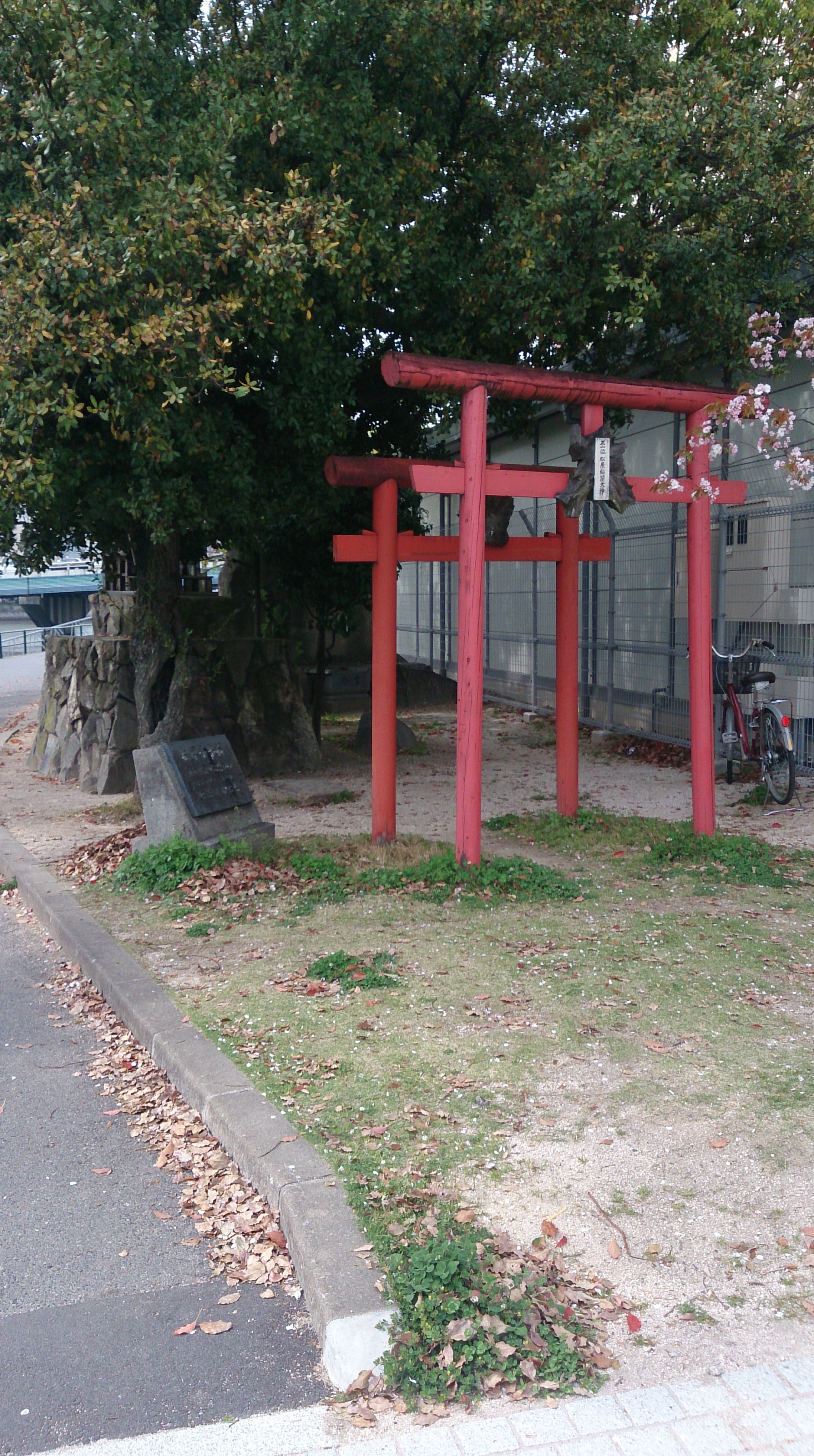
 I took a short jaunt to the left once exiting the ferry, just to see what was there, and that’s where I came upon the small torii gate pictured above, looking out onto the water. I found a cute little deer over there as well, which led me to wander some of the streets a bit, guiding me to a local little park area with a couple more deer wandering around.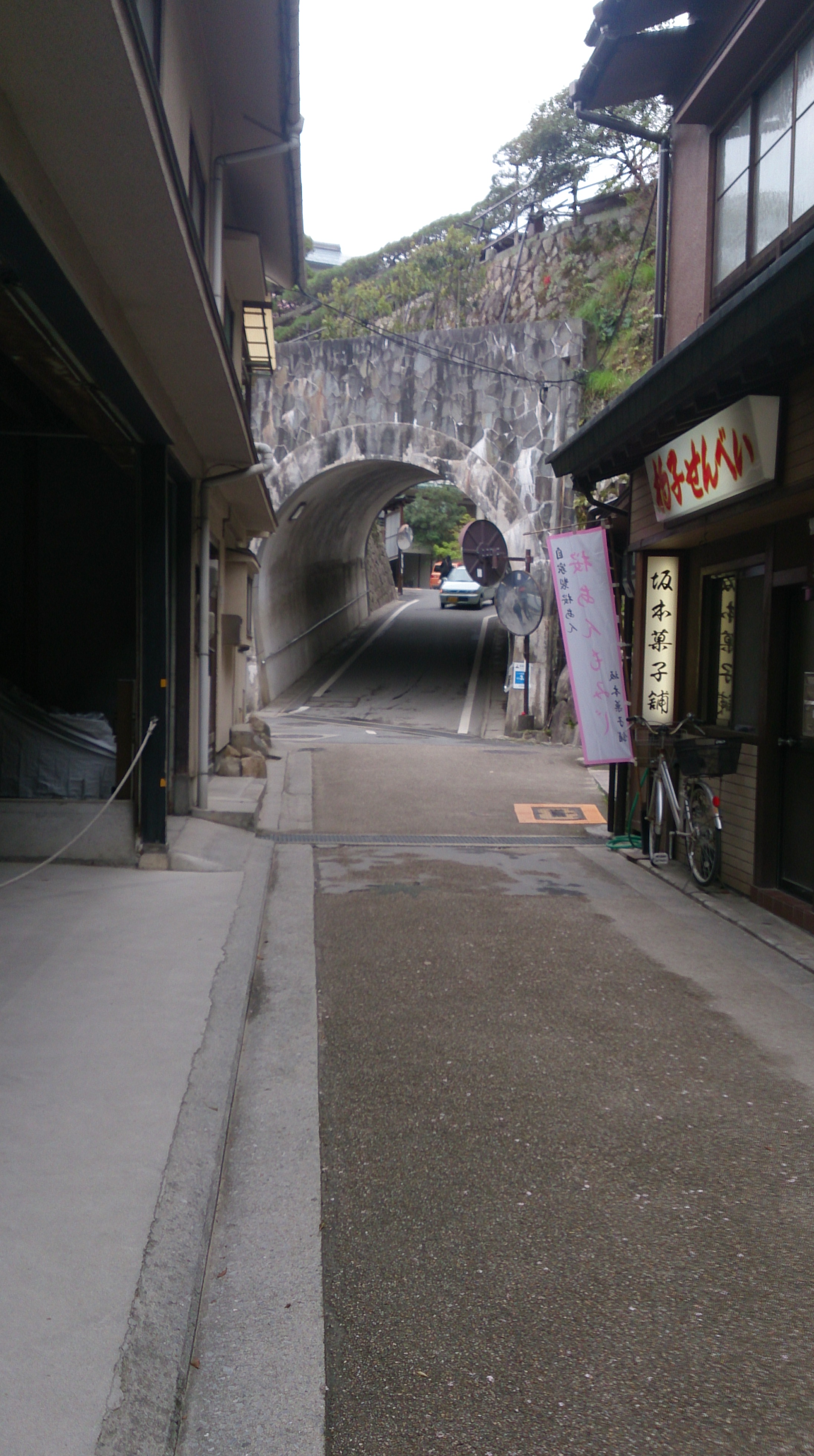










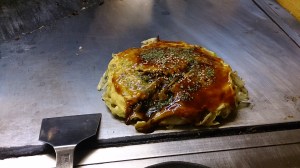 At it’s most basic level it’s a pancake with veggies and meat in it, but that’s simplifying – you can really put anything in it you want! It’s really delicious. Hiroshima’s specialty is okonomiyaki with yakisoba in it – basically like a mashup of the two meals together! The first time I ordered though I went for normal okonomiyaki just because I wasn’t sure I could eat two meals in one as some Japanese people can. Because of the high standard of okonomiyaki here, most of it is delicious! So if you’re not sure where to go, you could pick one of the stalls in Okonomimura at random and I think you’d be alright. :)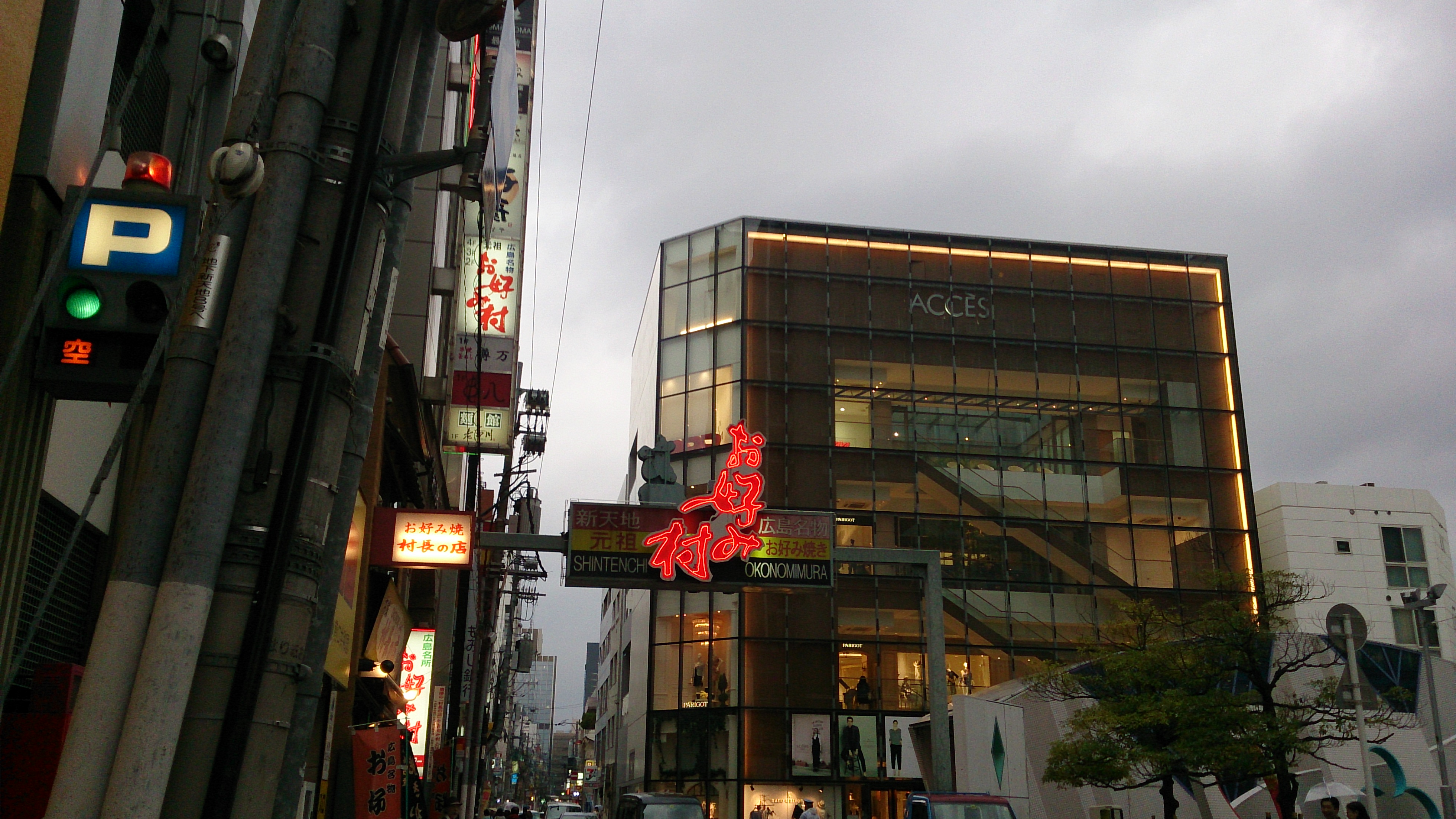




 laceywrites