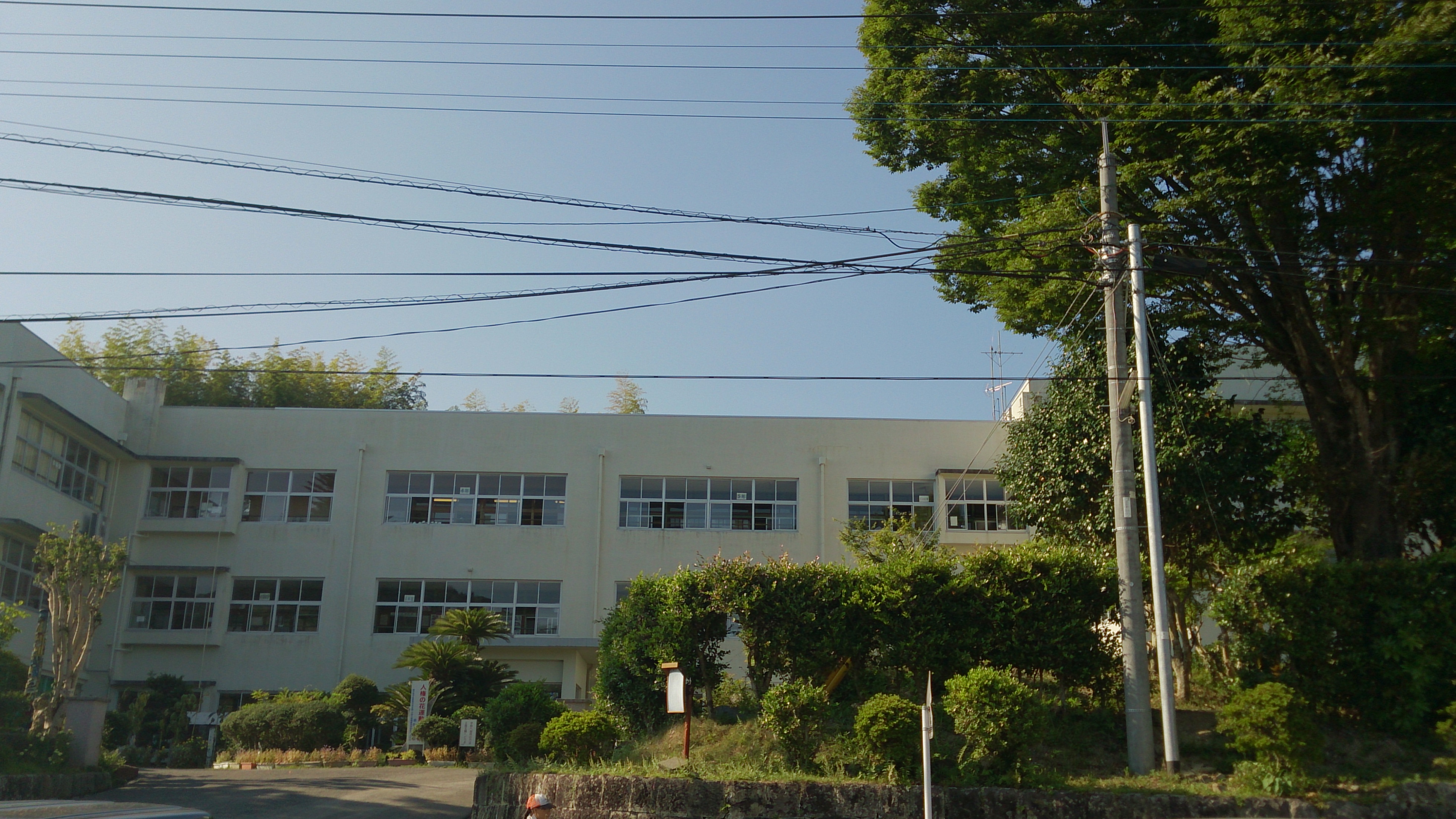
 One of the benefits of receiving an inaka placement on the JET program is you might be able to experience traditional Japanese events that you may not be able to in urban placements. I’ve experienced this for myself on multiple occasions at the smaller elementary school I visit roughly once per week.
This particular school, though small, has been kind enough to invite me most often to annual or special school events, one of which is the yearly rice harvest, or inekari (稲刈り). The rice harvest usually occurs in late September to early October. This is an event where we all set out into the small field located close to our school, wearing long sleeves and pants despite the hot weather. This precaution is necessary to protect from the itch of the bugs and or grasses that could possibly effect our experience. A sunhat or large-brimmed hat of some kind is also required, to protect harvesters from resilient late summer, early fall rays. Luckily, both last year and this one, a teacher has been kind enough to lend me their sickle, although most-all students have their own and bring that along. Long rubber boots are also preferred wear, as it can be pretty muddy in the fields.

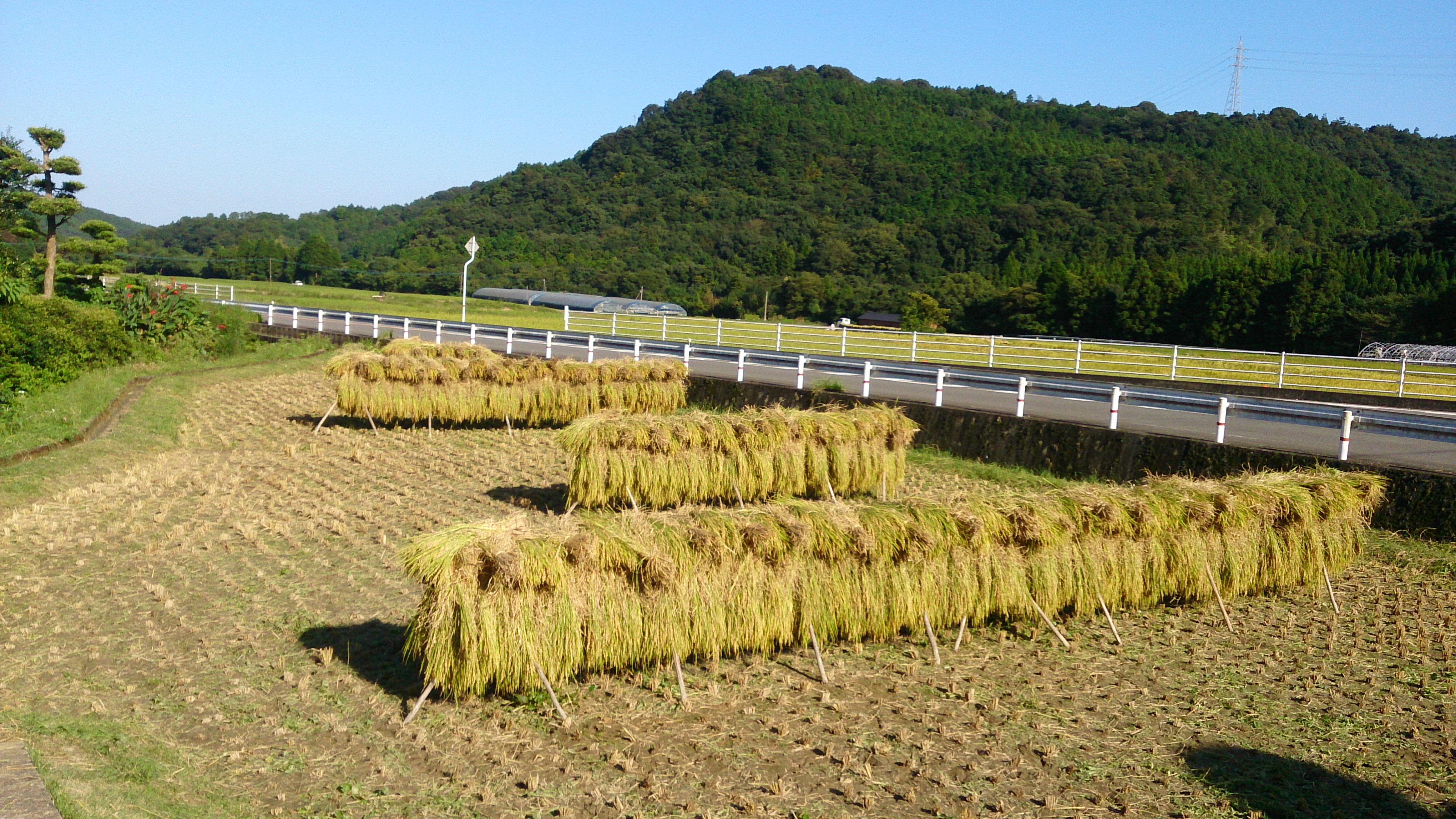
The task is quite enjoyable really, one of those chores that can actually be quite relaxing if you let it. Several people actually harvest the lengthy rice crops with their sickle and lay them in a huge pile. Then others gather the lengthy strands into bunches, tying them together with fresh long straw. After these steps are complete, a couple of people (for us, the field owners, who are pros by this point) set up drying stands that look somewhat like teepee framework, and we all hang the rice on these.
My first year I wasn’t prepared for the occasion, but still insisted on participating in my street clothes. It was fun, though a little itchy. But this year I was prepared! Delayed two weeks in a row because of rain, I had ample time to prepare most of my wear. The first year I mostly stuck to bunching, but this year I harvested and bunched equally quite a bit. While carrying out these duties, I also noticed several little frogs (and spiders) had made the rice field their home in the interim. Our harvesting activities definitely awoke a mass exodus in the frogs, which was quite cute though probably alarming for the creatures due to the fact that a few young boys became very interested in their escape…
All in all inekari is a positive experience! If you get the chance, I’d highly encourage taking part in it at your school(s). Even if someone invites you out to their own home fields it would be a valuable experience.


 laceywrites