Attack the Nihon Ichi: Misato’s 3,333 Steps

2013-11-16 11.23.25
One of the few photos I managed to take during my uphill climb. :)

One of the escapades I got into during my first year was an event called “Attack the Nihon-Ichi” in Misato, Kumamoto. Basically this is a special event in which one endeavors to successfully climb Japan’s longest stone staircase, coming in at a solid 3,333 steps one way, 6,666 steps round-trip. This particular event has you not only competing against others, but against yourself! When you sign up, you estimate the time that you will finish the race, whether full-course or half-course. Prizes are given to those who are fastest, but also to those who come closest to their estimated times. Plus, there are several prizes from sponsors that are raffled off to randomly selected ticket numbers, which you receive upon finishing the race. And everyone gets a customized certificate with their time and completion and a goodie bag at the end, so you definitely don’t leave empty-handed. And that’s just speaking of material reward!

So that day, equipped with my water can and some light baggage – I didn’t want to weigh myself down more than necessary – I journeyed solo to the meeting place, parked up, and then boarded the buses available for participants to get to the actual venue. You can really tell that this was once an extremely local event, improved upon over the years and made into a more well-known affair. The locale, nestled among the mountains, an old temple set at the end of the steps, paired with sponsors thrusting some kind of green health concoction under your nose at every step, was clue enough for me. So I kept to myself and focused on the task at hand.

The road ahead looked long indeed.

Though somewhat intimidated by my expectations alone, I set out optimistically, my mind determined though I hadn’t worked out seriously in some time. I’ll be honest, this is indeed a challenge! On November 16, 2013, I went on this particular voyage, and by god, I was glad to do it but I’m not completely sure I would do it again, unless I visit the steps for a leisurely hike. Some people set out sprinting right from the get-go, and with my own modest jog, I started to feel the burn around the 330th step. Your calves take a beating indeed, and you find yourself looking eagerly to each step marker, wondering what set of steps you’ve arrived at to guide your efforts along the way. But as the markers’ count increases you feel stronger and more determined with each step. When you’re tired, there are plenty of opportunities to stop and take in the beautiful surroundings while downing much-needed hydration. But if you’re not tired, you can trod on! The path is a mixed course of natural dirt path between long stretches of stone steps. Though the steps seem unending, the true feat is mastering your mind as you go up them, not feeling discouraged regardless of the step number; the driven feeling that comes out once you reach at least the thousandth step amid a forest clearing.

In retrospect, I felt so elated (and somewhat gelatinous) at the end of my 6,666 step journey. I estimated my completion of the course to be about an hour and forty-five minutes, and my actual completion time was an hour and forty-nine minutes. Now, you may think this is a pretty good guess, but winners of the estimation prize came within three seconds of their initial estimates! This is pretty incredible on the one hand, but possibly do-able if you’ve run the course before or train on the steps fairly regularly. Also upon my completion of the course, I made a beeline for the yakiniku foodstand, and immediately ate four sticks on my own. It was delicious and perhaps more rewarding than the certificate I received afterward! Having participated in the event and taken in the course, I would very much recommend tackling the stone steps via a hike rather than a time-oriented competition. You would have much more time (and much less pressure) so that you could leisurely take in the nature around you and visit the old temple found at the end of the steps. It’s quite beautiful there.

Needless to say, for this course, the way back down was much easier than the trek up for me. I was able to whiz past a reporter’s attempt to interview me toward the end of my journey, looking completely non-plussed by my own weariness and physical exertion, surprising even myself. It was great! I’d recommend it to anyone in the area, but be prepared for a workout, for sure!


A Milestone

2014-12-17 17.38.16That’s right everyone! I’ve finally done it. I joined the Dir en grey fan club. I’ve listened to Diru for a long time in my life and after finally attending two concerts in Japan in 2014 (I attended 3-4 of their shows back in the US), I finally caved in and acquiesced to my not-so-secret desire to join the group.

You see, for this particular fan club you can only join if you live in Japan / have an address in Japan. I’ve been living year for a year and a half just about so I held off a good amount of time. But I decided I finally have to join! Ultimately it’s a good feeling. And you get some cool stuff, which I’m pretty happy about.

Here’s a few pictures. I feel like a hardcore, true fan now!

2015-01-09 17.01.53

2015-01-09 17.03.03

Local Festival: ハイヤ祭り (Haiya Matsuri)

I had just missed what is supposedly the larger Haiya festival the week or so before I arrived (in late July), but I was able to make it to Hondo’s local Haiya festival. Though a bit late, because I was being fitted rather painstakingly into a yukata and travelling in a group, we got to watch quite a bit of the show.

This particular local matsuri I think of as a glorified parade on the main street of Hondo rather than a matsuri proper, but it was still a cool experience. Local businesses sponsored floats and the shamisen and drums were going the whole time. Many schools supported groups of students and teachers who went in for dancing as well. I’m not an expert on haiya dance at all, but what I saw of it looked interesting. It was quite hot though, and even whilst wearing a supposedly breezy yukata, I was perspiring.

My most fond memory of this particular event was that I was immediately able to access street food and honed in on my favorite yakiniku and, later, my lemon snowcone. I love yakiniku, especially from street stalls!! It’s probably not the healthiest, but very delicious~~~~. I always eat this whenever possible… :)

The larger Amakusa Haiya festival is held every year in Ushibuka around late July or early August. I definitely plan to go this year and really get in on the local action. I’m looking forward to it! In the meantime, please enjoy a few of the photos I was able to take that night at Hondo Haiya Matsuri.

A Wooden Stick: Your Japanese Identity

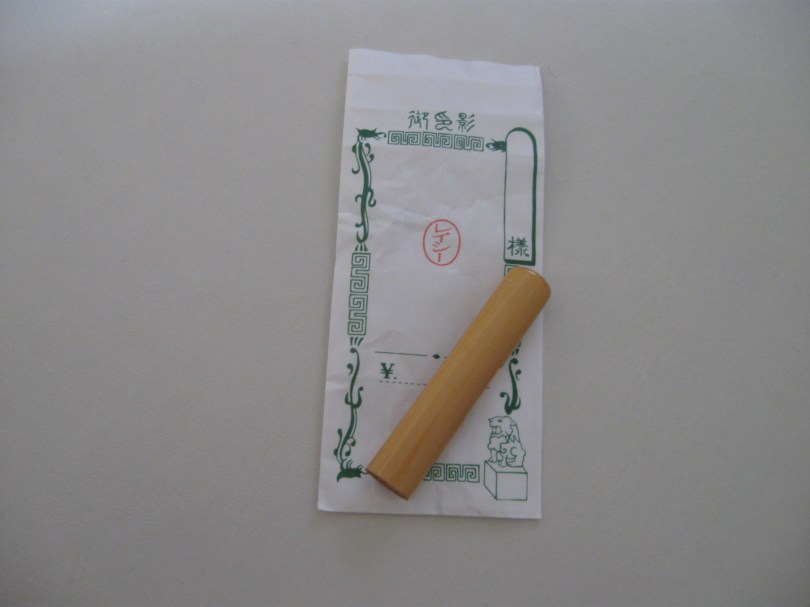
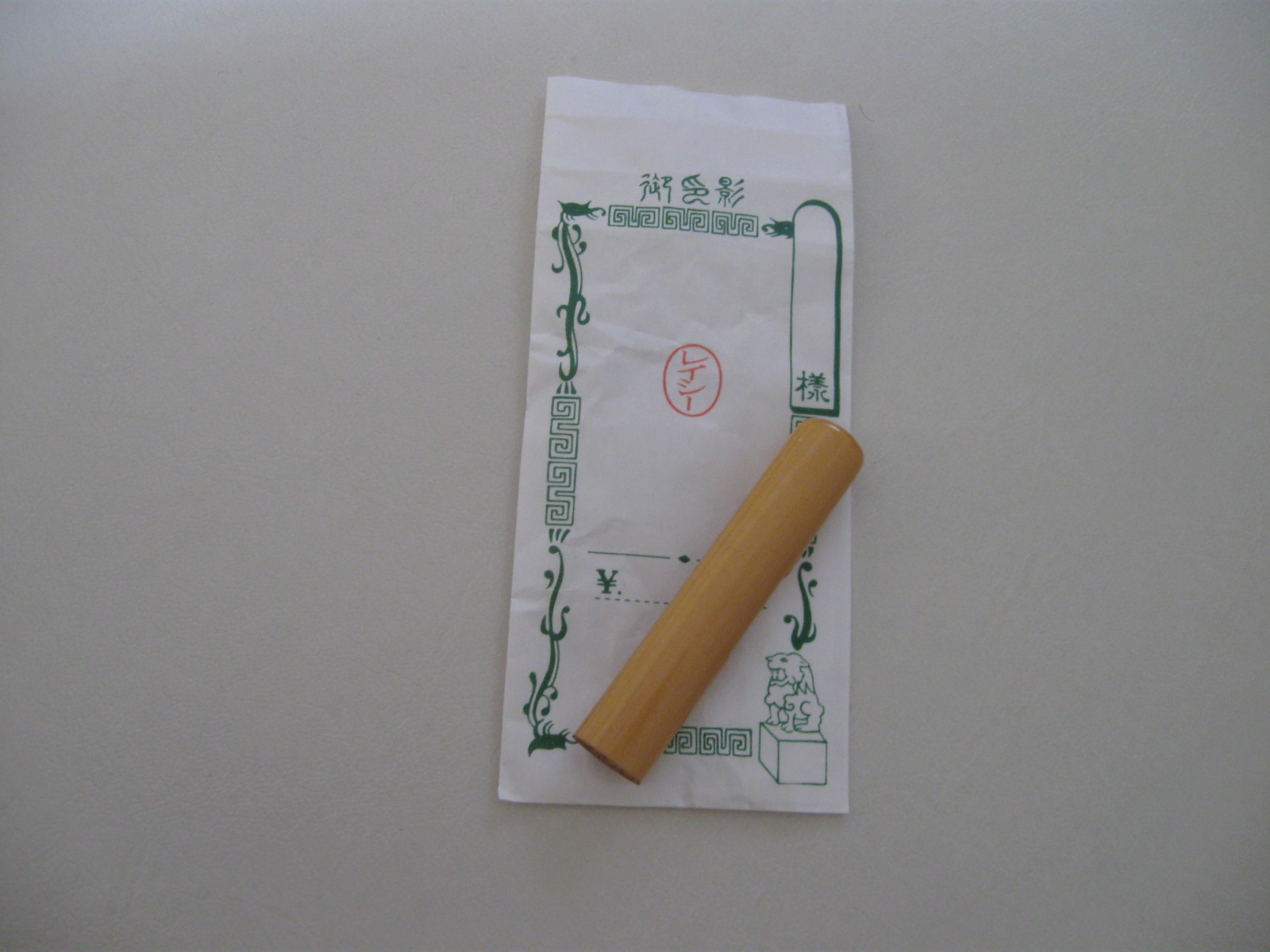
So yes, I’m being a little facetious here. It’s so much more than a stick. It’s a stamp! (Basically.) But it looks really cool!

IMG_1727

Right?! And they only cost roughly $20 US.

IMG_1725判子・印鑑 (hanko/inkan) are made for people as a way to certify your identity and approval for many things, not limited to the creation of a bank account, starting up gas and electric for your house, signing up for mobile phone service, and any number of financial obligations it seems. You would probably need it for a house or an apartment(?), but in the case of municipal JETs it seems that certain residences are furnished by the establishment for those who work in the area temporarily. I think this has a lot to do with the fact that there seems to be what I’ll call the yearly lottery in April, at which time teachers are moved about the prefecture to other schools en masse.

I also personally have to stamp an attendance sheet every day in the teachers’ room when I report to work, so it’s possibly common to use the inkan in regard to employment, especially as civil servants (which is stressed to us that we are!).

As to their real official weight, I can’t really comment. Apparently people can take your inkan and stamp for you, which seems to somewhat defeat the purpose or the ceremony of it all. On the other hand, you could easily argue the same thing about the validity and ceremony of signatures in terms of legal and financial obligation. All in all they do the same thing: look cool. :)

I hope to discover even more uses for the lovely inkan, but you may have to wait for something a bit more detailed (the backlog of posts is lengthy!).

So I’ve been in Japan about two weeks

and it’s been great!! I’ve crammed a lot into those two weeks and I’ve taken a lot of pictures as well so this evening I hope to line up and post the backlog of posts I’ve aimed to either shed light on local events or Japanese life in general!

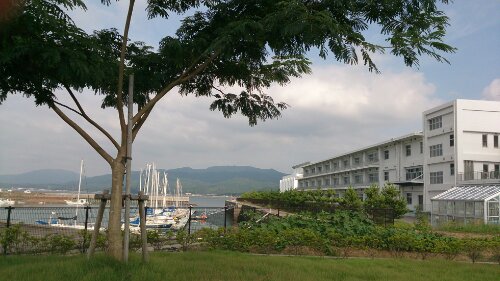
Until then, here’s a cool photo.
( ^-^)ノ∠※。.:*:・’°☆

image