One of the local sights in Amakusa is a dam in the small locality of Kamegawa, aptly called Kamegawa Dam. This dam’s construction began in Showa 43, Western calendar 1968, and was completed in Showa 57, Western calendar 1982. It is based around a Doumeki Lake, also known as Doumekiko (道目木湖). There’s not a whole lot to the dam itself but a few simple but beautiful views, but across the way from where I took these pictures is a small park, where my earlier pictures for Sakura in Bloom were taken. It was a pleasant excursion indeed. I hope you enjoy the pictures!
For my first birthday in Japan, which is in fall, a couple of my travelling buddies and I decided to make a weekend out of it. My birthday is usually around a national holiday, so there was conveniently a three-day weekend to really get out in the area and enjoy ourselves.
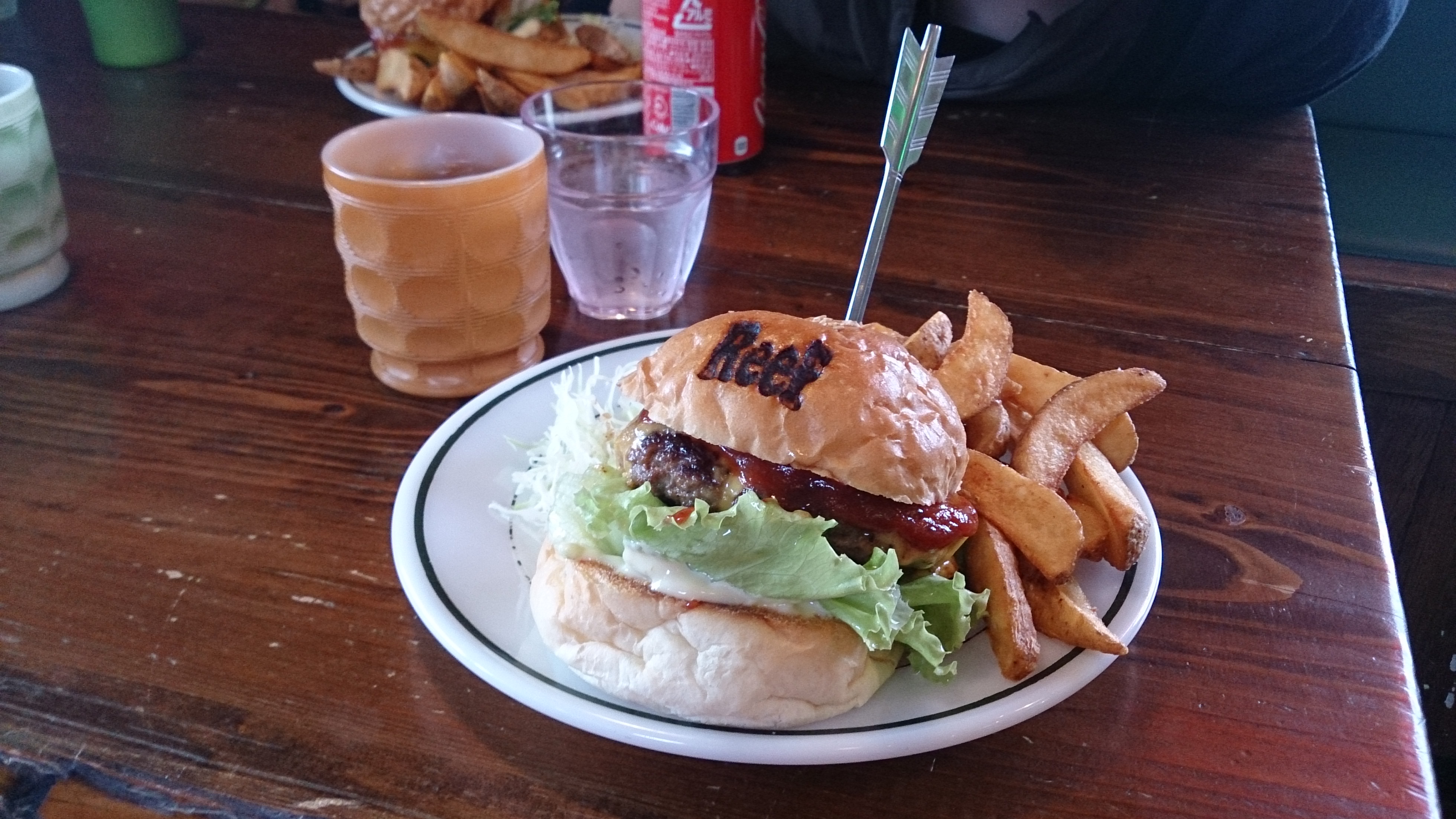
Our first stop on the way to our first major activity was Reef Burger. We’d been in Japan for about four months by this point, and by then I hadn’t had a decent burger yet! They’re quite prevalent but it’s hard to find a good, creative burger here on par with our homelands’ standards. I had heard about this establishment through a guide that a previous ALT had written up about the Kumamoto area, and we all were curious and wanted to try it! It was worth it. This burger was quite delicious, and completely on par with other countries. I’m not sure how he learned to do it, but the cook at this restaurant knows how to throw together a tasty burger and fries! I felt so incredibly full afterward. And the entire staff of three people was quite friendly with us, which is a huge plus. It’s always nice to encounter a friendly face! (And no, Japan, I don’t mean a creepy, stalky, overly keen face. Just a run-of-the-mill, kind face…)
They even have their own bun stamp!
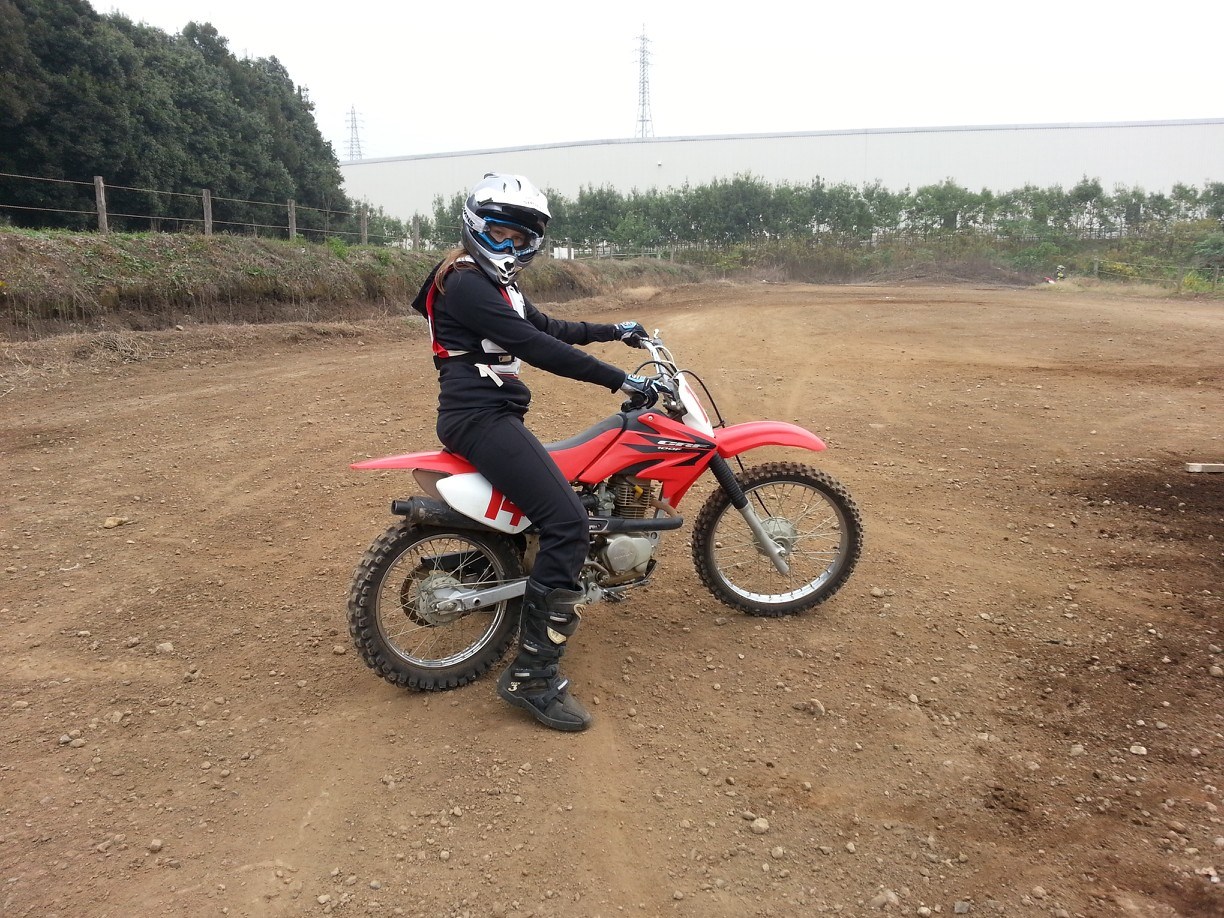
Anyway, after that, we continued our trek to the Honda Safety and Riding Course Kyushu, which is in Ozu Town, just northeast of Kumamoto City. Our main goal for this expedition was to ride on their off-road course, which you can do for little to no experience as long as you pay for your rental. We went for the 4 piece set option, where you rent an off-road bike (model varies depending on your build), and along with it you get outfitted in a helmet and goggles, a chestplate, and boots, which as sufficient for a somewhat experienced motor vehicle operator. I say this simply because toward the end of our three-hour riding experience, I was getting a little too confident, landed a little bit oddly, and subsequently was off my bike. And as a friend learned that day, contacts are advisable in lieu of glasses, because it’s difficult to fit the goggles over frames. So once you get outfitted, as we did, we spent about 30 minutes getting acclimated in a smaller dirt area adjacent to the course. It was fairly easy for me to pick up as a result of my childhood on four-wheelers and such. But if you don’t think you’re very good at operating bikes and such, you may want to skip this outing. Personally, I thought it was a pretty exhilarating thing once I was on the course though! I felt like a kid again. You’re going around and there are jumps and turns everywhere, and experienced motorists are driving past you at high speeds. I really enjoyed myself! And I’m looking forward to going again sometime.
Needless to say, after this experience we were completely sweaty and dirt-covered, and to our somewhat surprise our entire bodies were sore! So I convinced everyone that we should hit the onsen on the way back to Kumamoto proper, where we planned to Cybac for the night. I think it’s an incredibly good decision for anyone who decides to bike half the day. I pushed for it because my companions hadn’t been to onsen before in Japan, and I really think it’s something that someone should definitely experience while they’re here. And I think everyone enjoyed it! I did. There’s just some relief, especially for the muscles, lying in wait in that warm water.
So after a night at Cybac, we set out again in the morning with our main goal being to hit Reigando at Unganji, or Ungan Temple, northwest of the Shirakawa River, on the outskirts of both Kumamoto and Tamana. Reigando is the legendary cave in which ronin swordsman Miyamoto Musashi lived out some of his last days, and in which he is said to have written the greater part of The Book of Five Rings, or Gorin no Sho. We stopped quickly at a park on the way – I believe called Iwa no Sato – and then walked down to Unganji. You have to pass through the temple to get to Reigando, so if you see the temple you’re in the right area! Just keep walking. You’ll pay a small fee to get to the area, and you just follow the path down to the cave. It’s a nice outdoor space and a interesting historical spot to check out if you’re in the area. Have a look at the photos below and perhaps you’ll see what I mean! :)
Ringside is a very unique local bar oriented a short jaunt from my own abode in my town. Both of the times I’ve been here have been in September each year, and I’ve quite enjoyed myself each time. The picture above is of myself (on the right) and some friends, with the bar’s owner. :)
It’s a fairly local setup run by an enterprising family that also owns the ice cream shop next door. The atmosphere is fairly casual, with bar-goers usually imbibing the standard beers that the Japanese are so fond of. But the unique element of this particular bar is not necessarily its atmosphere or design, but the theme that it flaunts: all things wrestling.
Here I am, in the blue mask this time, the first time being at Ringside with a group of ALT’s and the bar’s owner. Perhaps you noticed, but the women’s wrestling masks have a distinctly catty flair…
On both occasions I’ve hit this bar with a group of foreigners, we have drank and initially ended up in Mexican wrestling masks of the shiny variety. And that’s not where it begins or ends! The entire wall is filled with wrestling memorabilia, trophies, belts, all of it — from toys to autographed items, this bar screams “WRESTLINGGGGG!” And if you go into the women’s restroom, you’ll find yourself amid a sea of female wrestling paraphernalia. I’m assuming it’s likewise for the men’s, with male wrestling-related decor splashed across all walls.
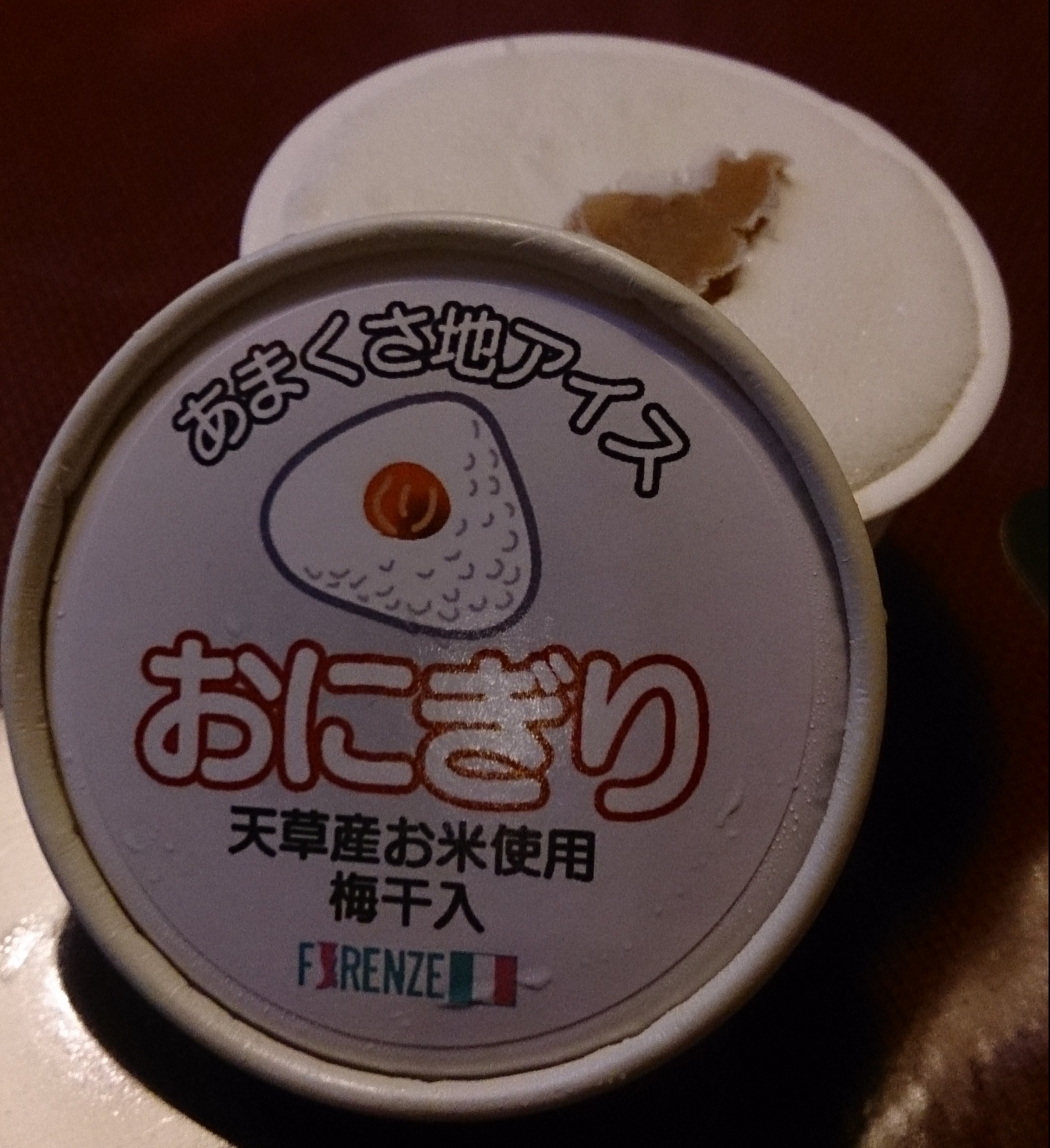
Another interesting thing that I learned on my latest outing to Ringside is that aside from simply owning the next-door ice cream/gelato place, the man who owns both also makes his own uniquely flavored Japanese ice cream! We were able to try two of the flavors last time, takoyaki and onigiri, the English equivalent of octopus ball and rice ball. :)
If you are placed in Amakusa as a JET, you should definitely seize the opportunity to visit Ringside and perhaps their ice cream enterprise next door!
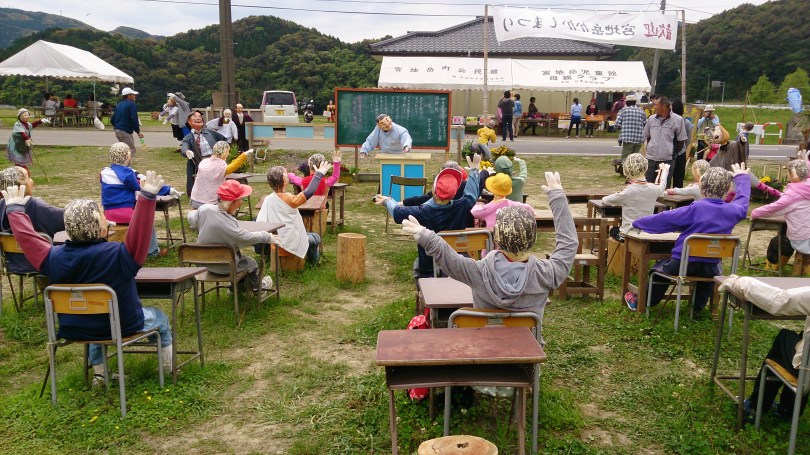
Possibly the most amusing and terrifying small local festival I’ve been to yet, the Miyajidake Scarecrow Festival (かけし祭り) is one of my favorite yearly events. For weeks before dropping by, single scarecrows popped up around town, scaring the living daylights out of innocent passers-by with their lifelike poses. I saw one sitting at a bus stop, another waiting innocently alongside the road, and each time I was started into alertness. This festival should receive a prize for its simultaneous sincerity and creepiness, making it an event that I look very much forward to.
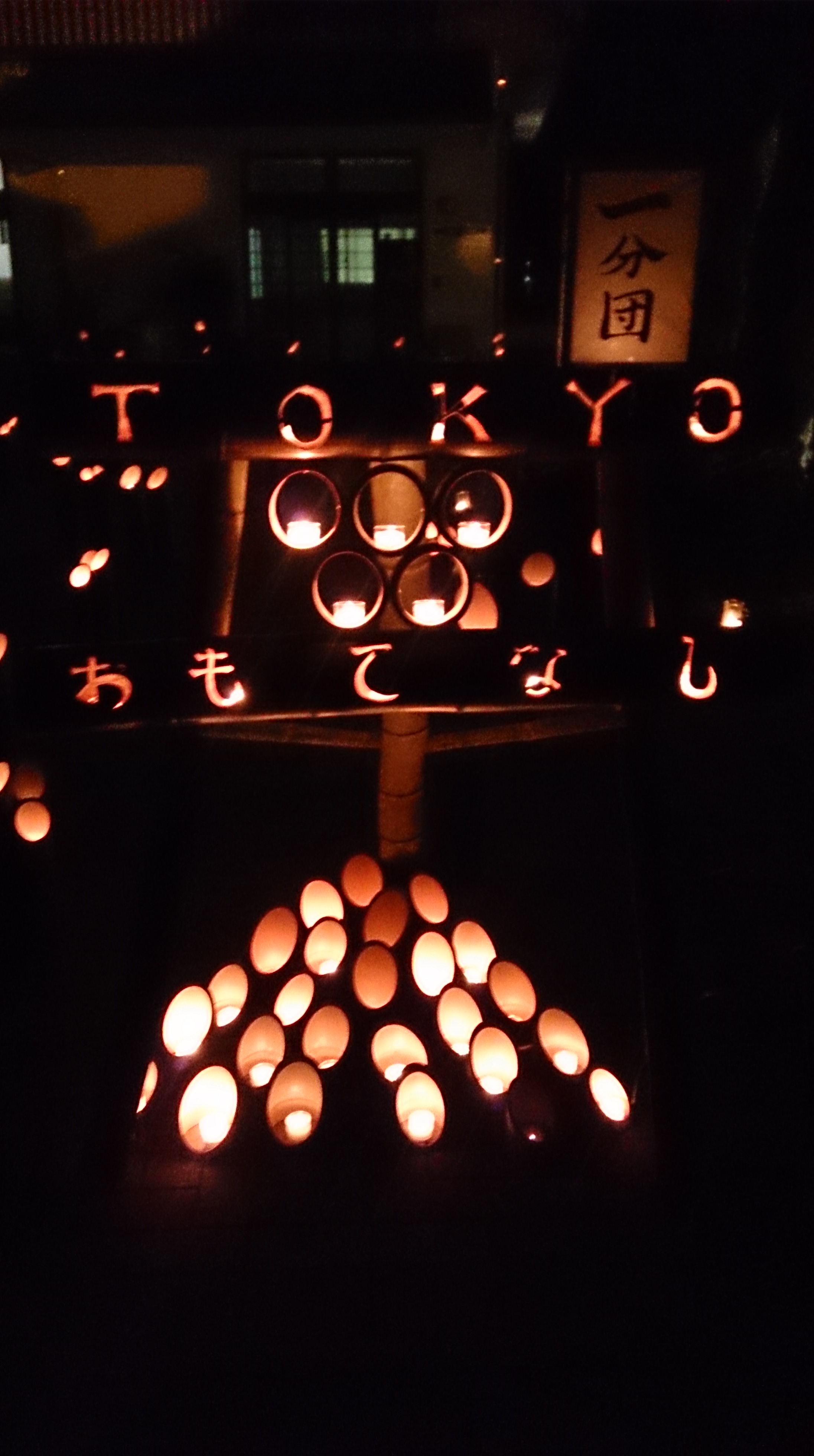
Over the course of the two years I’ve been here, I’ve set out proudly with others to see the local Lantern Festival in Itsuwa both years. Usually held in late October of each year, this small festival is worth going to because you can see an aspect of Japanese culture that is not as largely publicized as other aspects we often are told about.
One of my favorite parts my first year was hearing a bit of koto music being played by three ladies a little apart from the main festival itself. This year, an elder man was reading Japanese stories, but it didn’t live up to the koto for me. And for those who are interested, the festival has a stand selling a nicer variety of lanterns to festival-goers. There are also quite a few street food and goods stalls stretched along the main drag of cozy Itsuwa, serving as a guide to the event space. Some of the festival’s better photo opportunities come from the shrine at the top of the hill toward the west, and the lit-up zen garden in a cozy alcove at the center of the main street. I took a lot of pictures; some of which are definitely better than others due to lighting, but all in all this is a good local event that offers a taste of Amakusan pride. :)









 laceywrites