
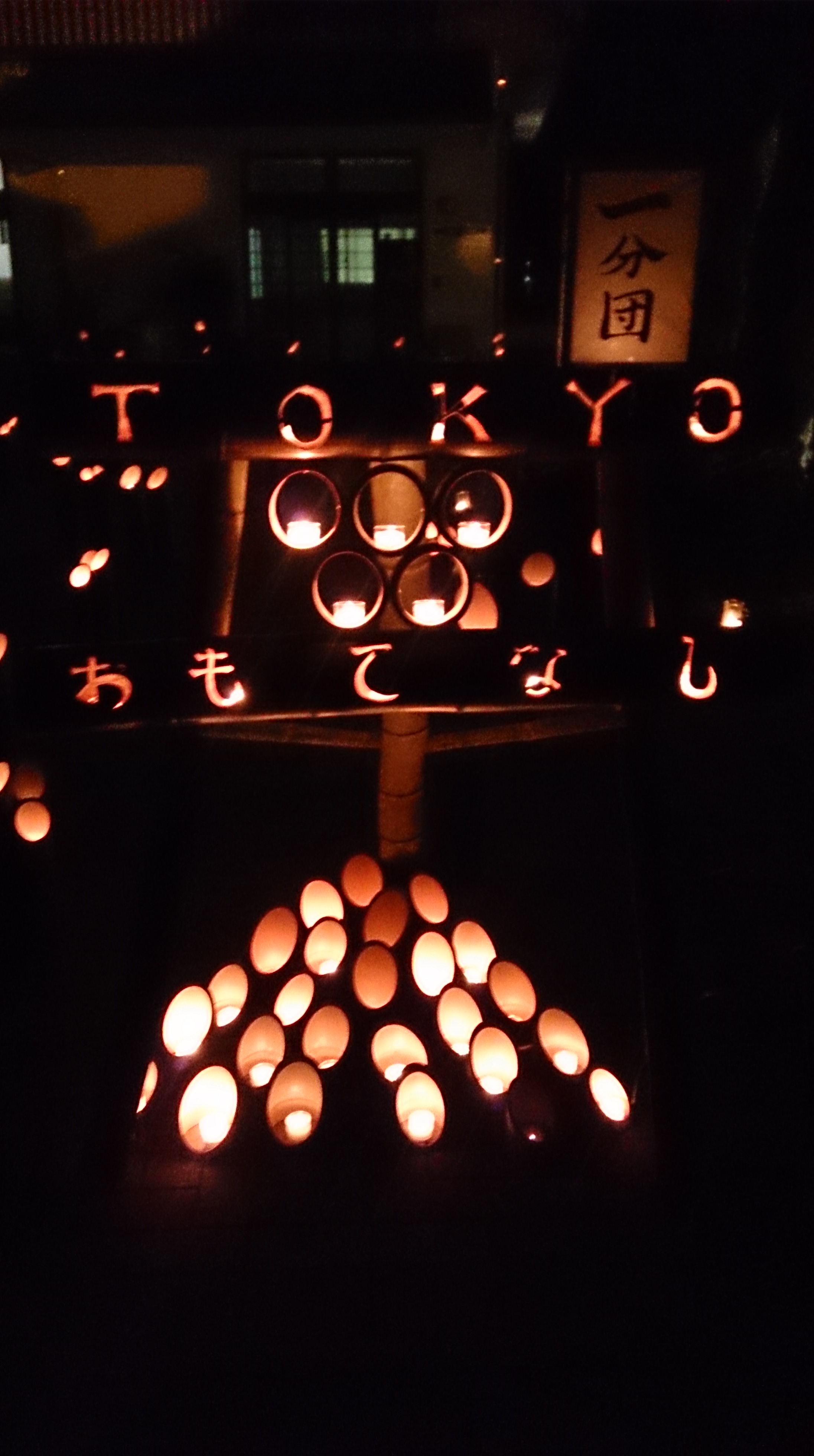
This is a festival I just happened to luck my way into when I went to visit my previous host family in October the first year I arrived for JET. This was a small local festival and we didn’t stay long, but in the short time I was there I got to experience a fair amount! 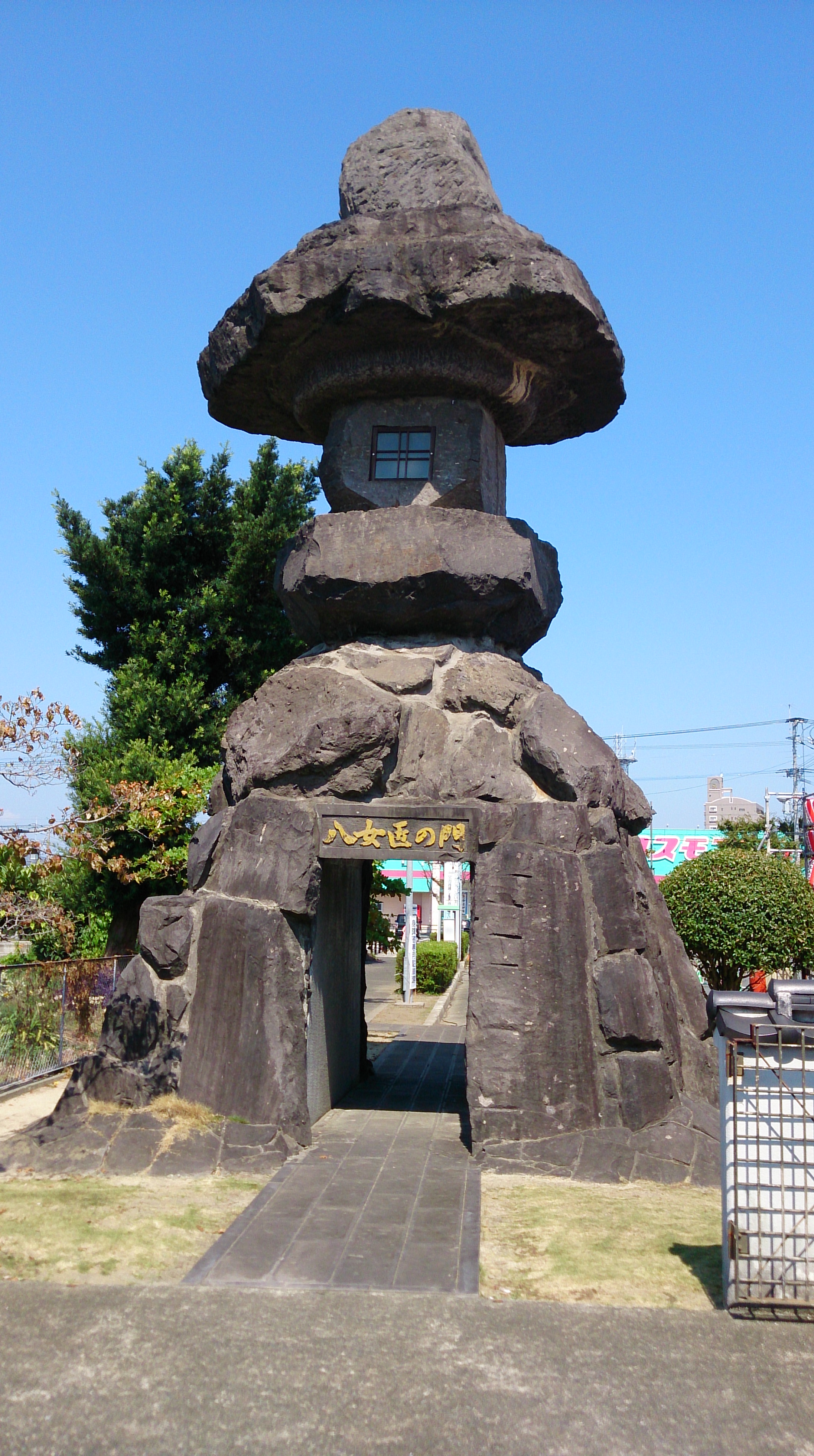 Yame is a town located on the outskirts of Kurume, which is well known for its green tea. But it also holds a yearly Lantern and Doll Festival based around the local puppet house. I had actually been to this particular culture house before when I was first in the area – our group of local homestayers made a traditional Japanese paper postcard there, with pressed flowers and pulp. It was an interesting experience at the time, and I was excited to realize that I was back in the same place again after so many years.
 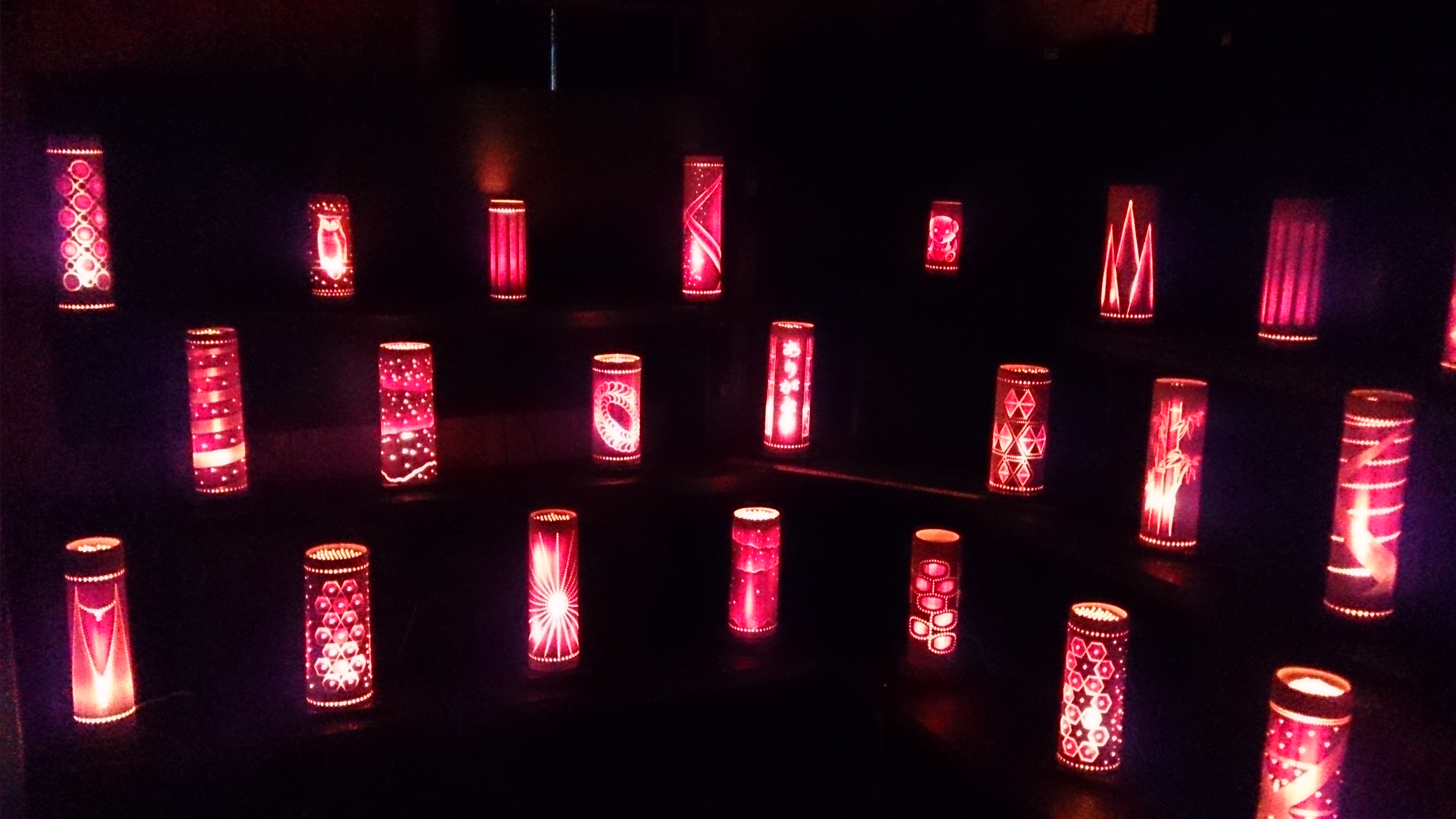 First, we ventured into a historical writer’s home which now functioned as a museum, and looked around his abode for some time. There was a great garden space that was set up much in the Buddhist temple style, with sand, rock, and select plants making up the exterior facade. Though it may sound simple, it was quite beautiful. In one of the small buildings set alongside the house, wood-carved lanterns lined the walls, giving it a calm, but slightly eerie aura that I enjoyed quite a bit. Then we wandered along the small streets, peeking in several shops along the way. The main shop of interest for me was a traditional green tea making shoppe. The architecture of the building was quite interesting, with a traditional facide painted black and a large machine at the front of the building. Whether they actually use the machine or not, I can’t say, but their tea is delicious and so are their tasty green tea chocolate crispy snacks!
  A bit further down the street we stopped and chatted with a local vendor while taking a few sips of ramune. Upon chatting, my host parents discovered that they were conducting jinrikusha rides down the street! Usually jinrikusha rides are a unique experience in Japan, but in some areas they can come at a cost. This one was a rare low price, so my host parents insisted I go! I insisted that someone come with me, and it was quite a fun ride. He took us around the area and explained bits of local lore along the way. Though it was fun I did feel bad because it must take a fair amount of strength to hoist people along the streets in continuous motion, not only once, but for whomever pays for the service! Our hoister was quite thin and spry, so perhaps he just considered it a good workout. The last stop of the day was the doll theatre, which I believe is housed in the Yame Traditional Arts Museum. In the theatre, there is a video on loop that showcases a previous performance. Because of the busy festival going on, volunteers were on hand this time, and one approached us and other onlookers and invited us up on the stage to have a look at the undercarriage and inner workings of the puppet stage. Upon climbing the stairs to the backstage, you’re on the original stage, where the dolls are, but if you journey below stage, you see quite a different world: an intricate network of string and woodwork, connecting and controlling each of the puppets above. This is where the puppeteers work their manipulative magicks. And it really requires a good amount of synchronization and skill. If I remember correctly, the guide told us that it takes around 9 people to operate each doll. The reason is that there is one person for each moveable appendage, so one for each are, one for the head, one for the feet and hands and so on.
 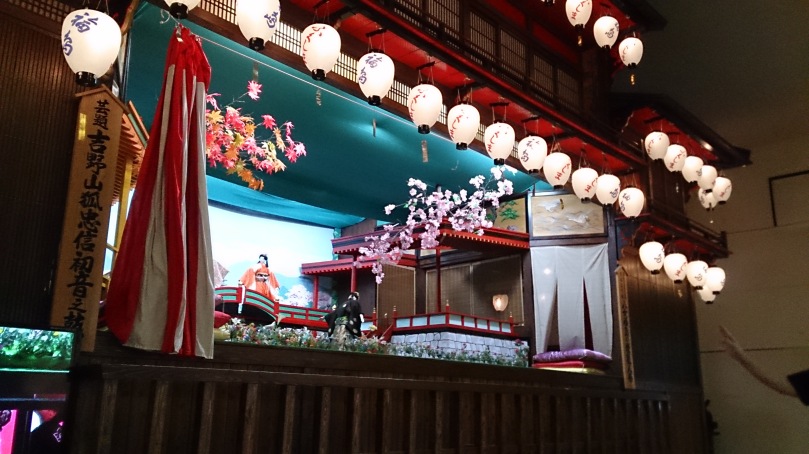 I haven’t watched an entire production yet, but it seems like a very unique art medium and cultural performance. This particular day was very culturally demonstrative for me and I enjoyed it immensely. If you get a chance to check out the festival I’d definitely stop by!







 laceywrites
