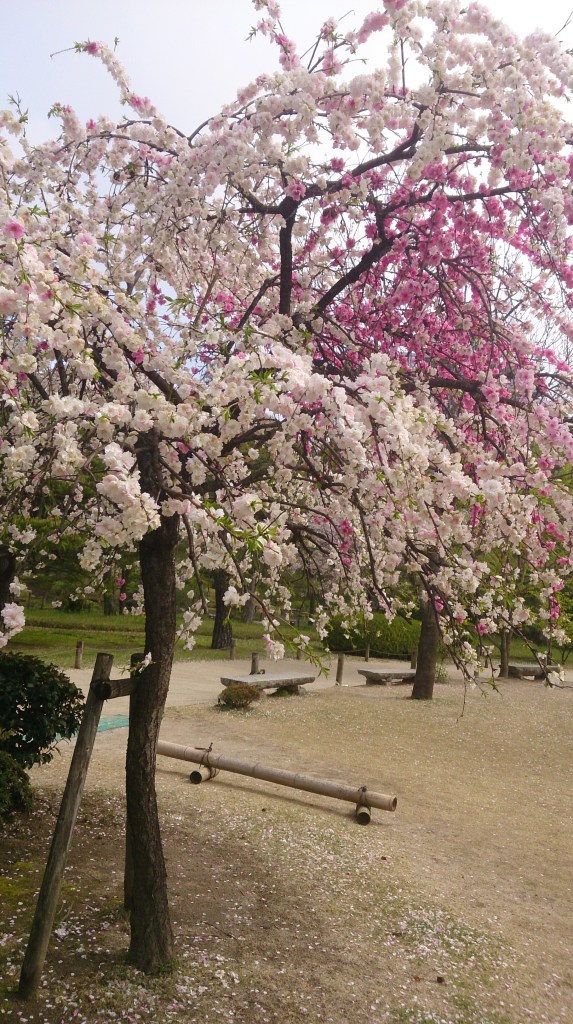
During the spring of my first year here, I ventured to Hiroshima on my own to scope out the city and enjoy many of its sights and sounds (not to mention foods). :) My initial impulse was to see a lot of sakura for my first spring season in Japan, and I definitely accomplished that, but I encountered much more than that on the journey. There were tasty treats, awesome visages, crazy weather days, and there was definitely a lot of walking. Here I’ll cover my first day in Hiroshima, which started with taking the shinkansen up from Kumamoto. It is a pretty easy 3-hour journey if you catch a speedier train that continues running after Hakata Station. You get on, sit down, and you can do whatever you like until you reach your destination! It’s pretty convenient, especially if you’ve got a book you’ve been meaning to read.
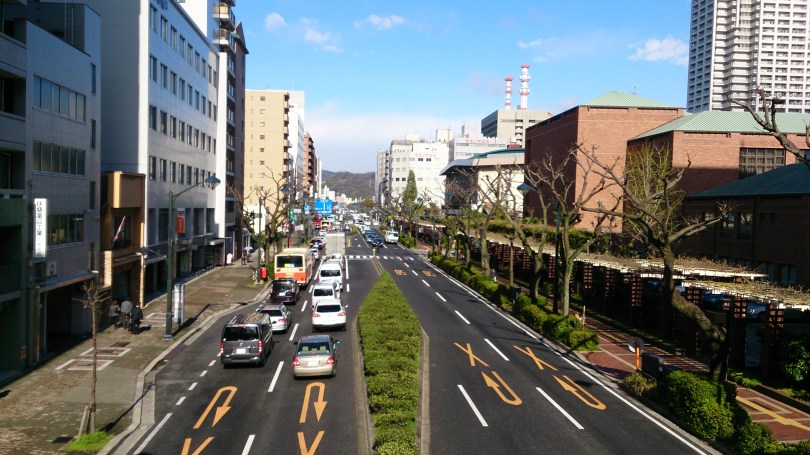
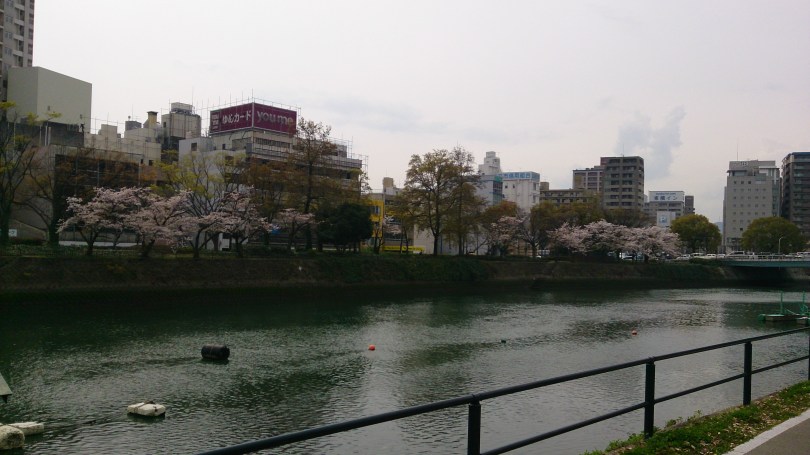
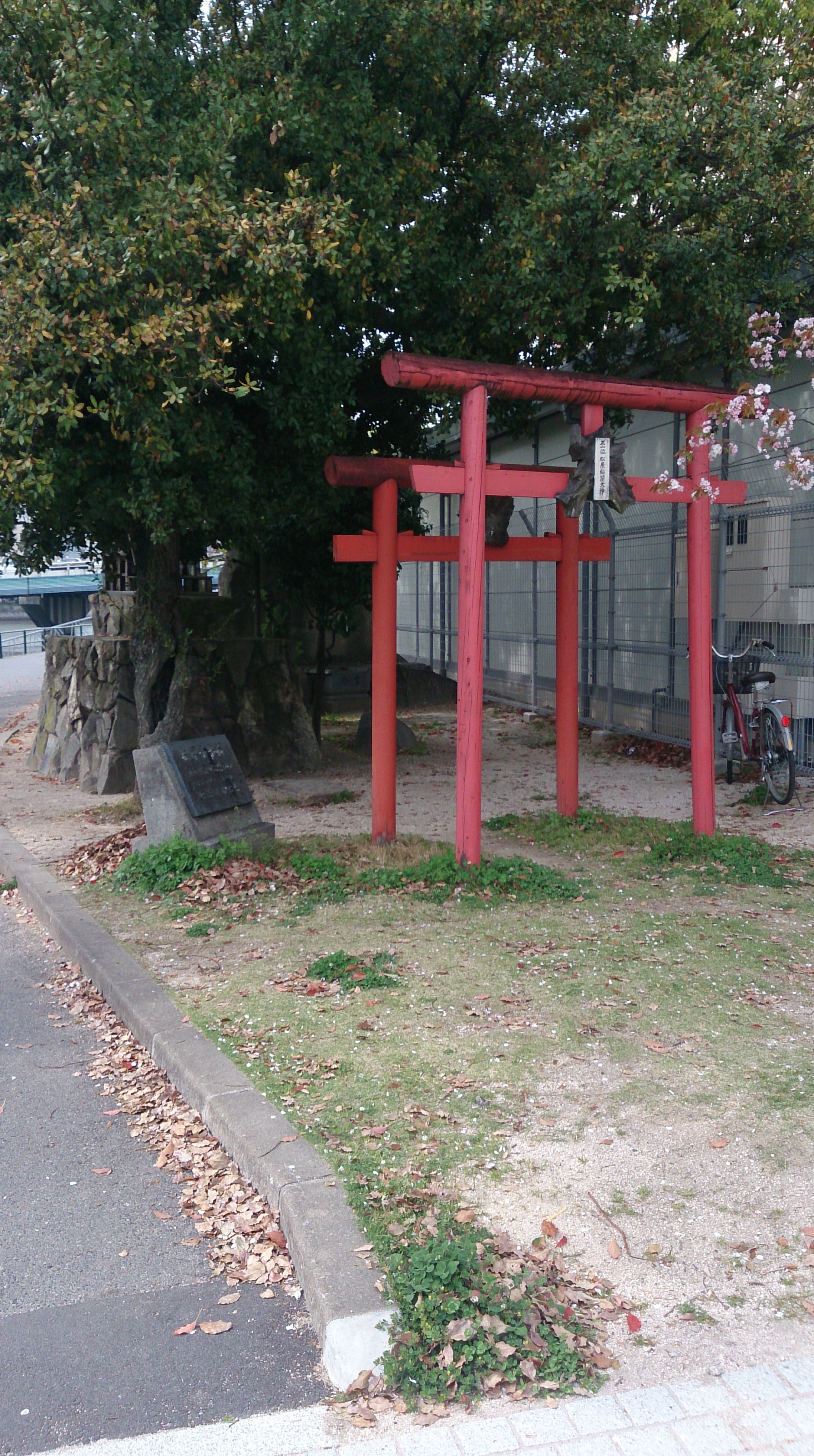
 Once I was off the train I had to find my hotel to check in. Though I was a little confused initially by the massive subterranean walkways, I made it pretty easily. It was a bit of a jaunt, but it was nice as it provided with with my first impressions of the city. Hiroshima has several rivers and offshoot waterways running through it, which gives it a really peaceful feeling. I also immediately thought that the city was quite clean on average, which impressed me. A lot of people were biking peacefully along the side road I travelled, and I spotted a small shrine and torii gate, which I snapped a picture of impulsively (this describes the method behind my picture-taking on the whole).
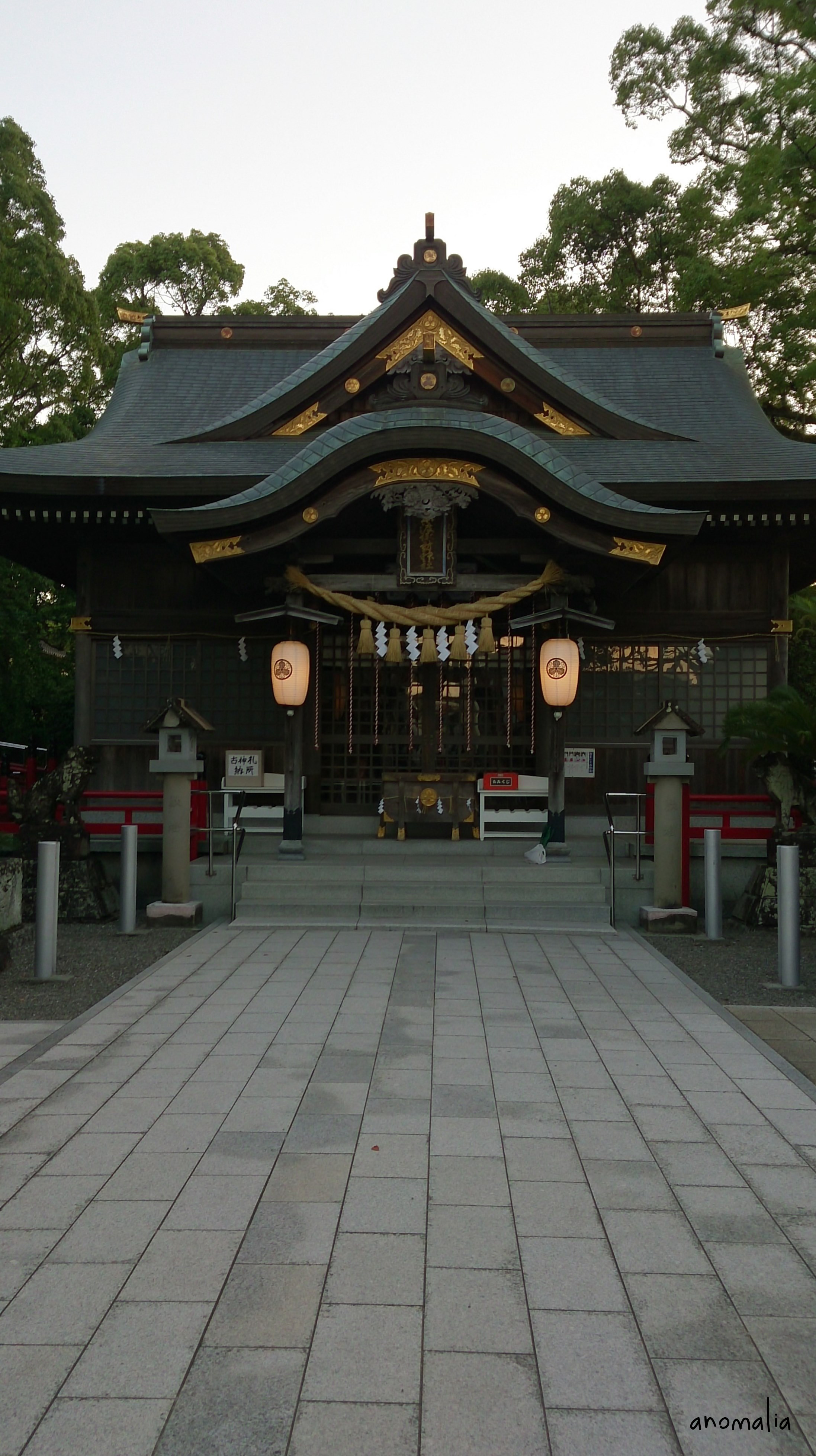
My next stop after the hotel was to head out to the closest, most renowned landmark in the area, which was Hiroshima Castle and what are the remaining buildings of Ninomaru, the second circle of defense. Visitors pass through Ninomaru first, and come into the main grounds of the shrine. There are some ruins and also a shrine on the grounds following. I liked Hiroshima Castle’s outside viewing area. It was a little scary, but it made me feel like a part of the history, being able to see all around the city. Though the castle is mostly complete reconstruction, I enjoyed it quite a bit and I believe it’s worth a visit. I’ll leave it to your judgment though! :)
This was one of my first treks all on my own in Japan, so my actual first visit to this area was only the Ninomaru area and the Shrine, because I met a couple of nice ladies at Ninomaru who offered to guide me to the famous ruins from the atomic bomb. Here’s more of the castle that I actually saw on Day 2. The castle grounds were quite beautiful for sakura viewing. And the ruins created an interesting atmosphere as I walked over that next morning.
My first day in Hiroshima was quite cloudy and a bit drizzly. I lucked out the next day getting fair weather, with a nice bit of sun to take photos and get outside for a bit. But the first day was very drizzly. I had to stop and buy an umbrella on the way to the A-bomb Dome. As you can see, it was indeed a dreary day, so I didn’t bother to take too many photos.
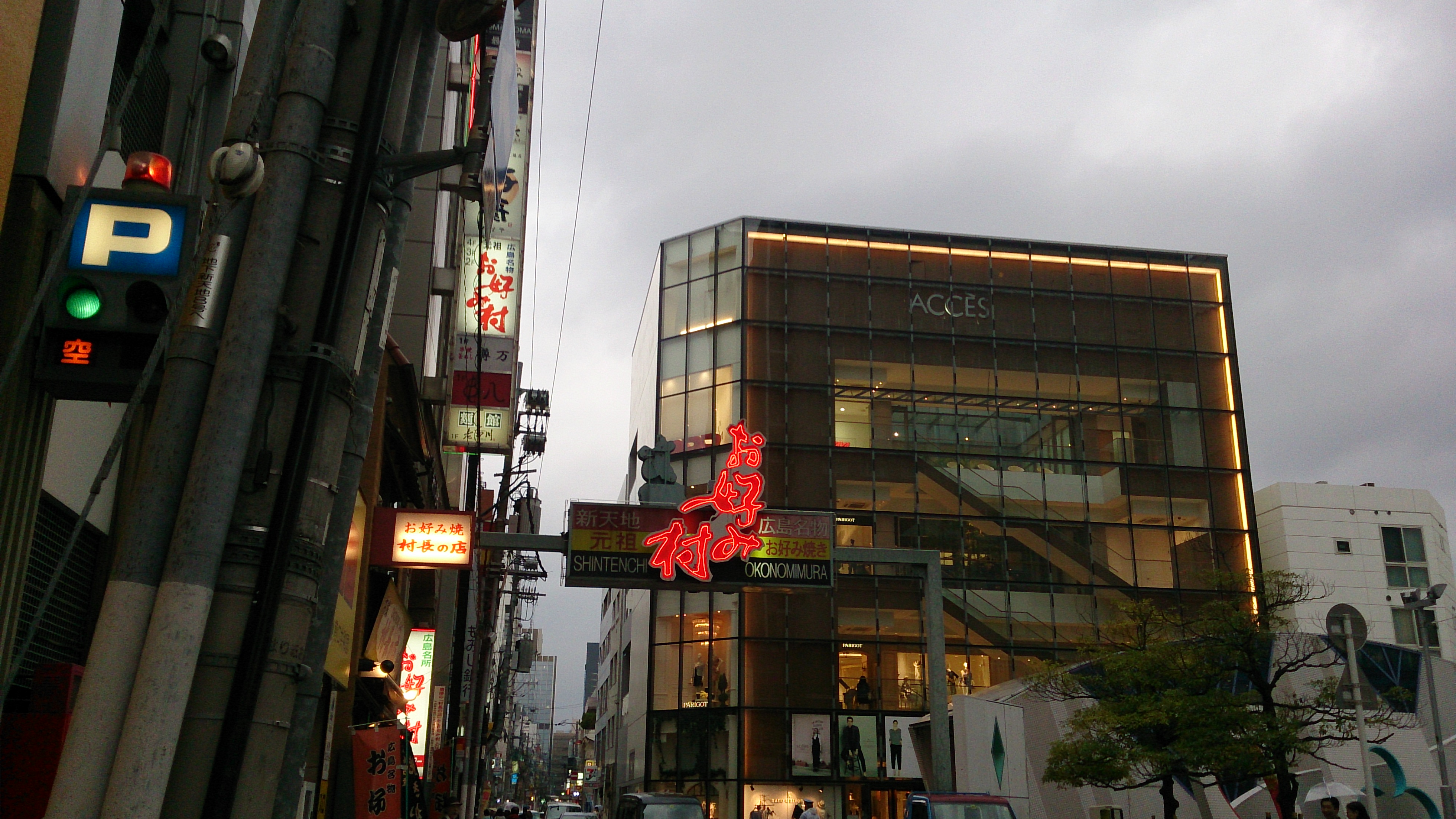
After viewing the dome, I walked on to a little bit of shopping and to grab a bite at well-renowned Okonimimura, the okonomiyaki village! If you’re looking for it there’s a large sign (see below) – you can’t miss it. Okonomiyaki is a well-known dish in Japan, and several areas have their own special varieties. 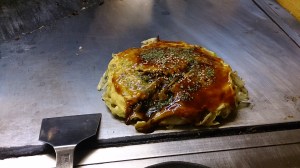 At it’s most basic level it’s a pancake with veggies and meat in it, but that’s simplifying – you can really put anything in it you want! It’s really delicious. Hiroshima’s specialty is okonomiyaki with yakisoba in it – basically like a mashup of the two meals together! The first time I ordered though I went for normal okonomiyaki just because I wasn’t sure I could eat two meals in one as some Japanese people can. Because of the high standard of okonomiyaki here, most of it is delicious! So if you’re not sure where to go, you could pick one of the stalls in Okonomimura at random and I think you’d be alright. :)

That just about wraps up Day 1 (with a small inclusion from Day 2), with days 2, 3, and 4 to follow! It’s a long one but I really enjoyed Hiroshima. Thinking about it now makes me want to venture back…. Until next time.

 On the outskirts of Yamato town in Kumamoto prefecture, is a very old, very functional aqueduct bridge known as Tsujunkyo. Built in 1854, it is the largest aqueduct bridge made of stone in Japan! Most weekends the bridge demonstrates its irrigating success by spurting out massive amounts of water around 1 PM. I went in the morning on the way to Miyazaki last time, so I was unable to see the latter, but it was still an interesting experience I wanted to share. The area is full of natural scenery intertwined with agricultural lands, which provides visitors with yet another idyllic vision of Japan.
















 laceywrites